The best metal detectors are not the machines with the longest feature lists. The right choice starts with what you want to find, the ground you will search, and whether the detector fits your body and learning style. This guide gives you a use-case-first decision path without naming a permanent overall winner or pushing a specific model. By the end, you will know which detector category deserves your attention and which specifications can safely move to the bottom of the list.
Best Metal Detectors: Match the Machine to the Target and Ground
The best detector is the one that remains stable in the ground you will actually hunt and responds well to the targets you actually want. That answer sounds less exciting than a ranked list, but it prevents the most expensive buying mistake I see: choosing a machine for its reputation, then discovering that its strongest abilities do not match the local parks, fields, beaches, or gold ground available to you.
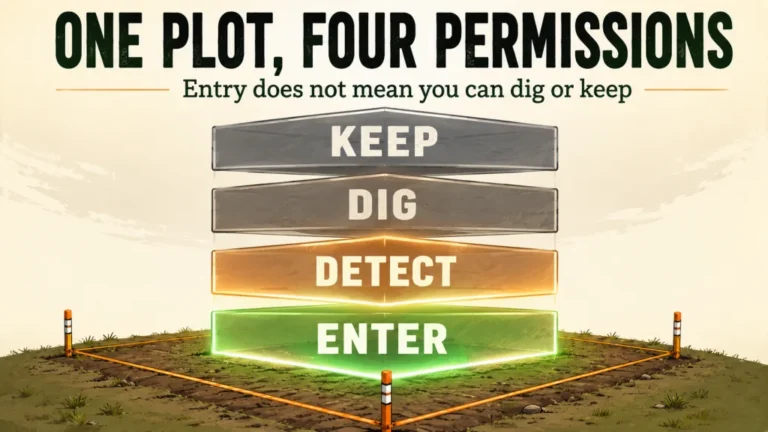
A better buying order is to read the land before reading the equipment list. First, define the likely target and site conditions. Then look at the technology and controls needed to handle them, and only after that compare price, accessories, and convenience features.
Key point: There is no permanent overall winner. A detector that makes sense for coins in mild park soil can be the wrong choice for tiny natural gold, wet salt sand, deep water, or a young user who cannot comfortably control the shaft.
This is a navigation and decision guide for US hobbyists. It does not rank specific models, compare brands against each other, promise detection depth, or cover commercial screening and underwater salvage work.
Step 1: Choose What You Want to Find
A target is not just a label such as gold, coin, or relic. Size, shape, conductivity, surrounding trash, and depth all change the signal. A small gold earring, a thick gold ring, and a natural nugget may share a metal name while presenting three very different detection problems.
Start by choosing the target that would make most of your hunts feel worthwhile. Mixed-use flexibility is a valid goal, but it still needs a center. A machine chosen for “everything” often ends up being acceptable in several places without being especially comfortable or capable in the place the owner visits most.
| Primary target | What makes it difficult | Buying priority | Common wrong turn |
|---|---|---|---|
| Natural gold | Small target size and mineralized ground | Sensitivity to small targets, ground handling, stable audio | Buying a general coin machine because it can technically detect gold |
| Jewelry | Useful targets overlap foil, pull tabs, and other low conductors | Clear audio, adjustable discrimination, site compatibility | Rejecting too much trash and removing the target range you want |
| Coins | Iron masking, modern trash, and variable target orientation | Target separation, repeatable identification, comfortable sweep control | Assuming a high number on the display is a guarantee |
| Relics | Mixed sizes, iron-heavy sites, uneven terrain, and uncertain depth | Ground coverage, audio information, coil options, usable controls | Chasing maximum depth while ignoring target separation |
| Mixed use | Conflicting requirements across sites | Versatility in your two most common environments | Paying for rare use cases that never become real hunts |
Notice that “can detect” and “is well suited to finding” are not the same claim. Most hobby detectors will respond to many kinds of metal under favorable conditions. The better buying question is whether the machine can separate, identify, and recover your preferred targets in the soil and trash conditions you expect.
The first-time mistake here is choosing by the most exciting possible find instead of the most likely hunt. If you live near public parks and permission fields but imagine one future gold trip, buy for the ground you can practice on regularly. Skill built on repeatable local hunts usually matters more than a specialized capability that stays in the closet.

Garrett ACE 300 uses a 0 to 99 Digital Target ID scale to show metal conductivity. Its Iron Resolution improves discrimination between desirable targets and iron trash. Electronic pinpointing helps narrow the target location before recovery.
Check On AmazonIf you click this link and buy, we earn a commission at no additional cost to you.
Step 2: Let the Environment Remove the Wrong Options
Once the target is clear, the environment does most of the filtering. Parks and maintained turf reward control around trash and careful recovery. Open fields change the problem toward ground coverage, uneven soil, iron contamination, and physical comfort over longer sweeps. Mineralized gold ground can punish a detector that looks impressive in an air test but cannot stay stable over the soil itself.
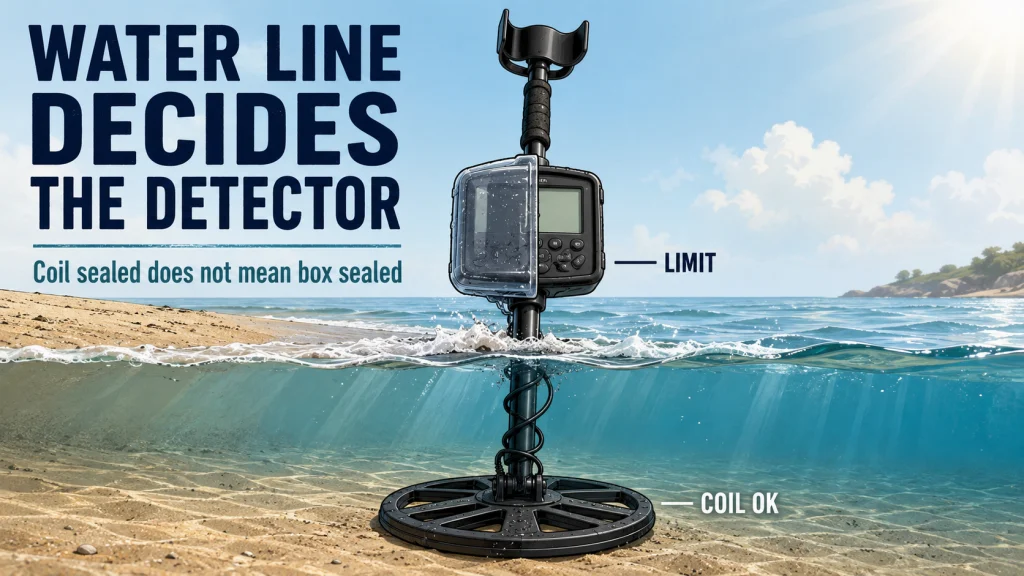
Beach hunting needs an even sharper distinction. Dry sand can be forgiving, while wet salt sand and surf create conductive ground conditions that may make an otherwise useful land detector noisy or unstable. Freshwater is a different environment again because it removes the salt problem but still requires honest waterproofing and safe control-box protection if you plan to wade.
- Parks and school grounds: prioritize separation, readable audio or Target ID, a manageable coil, and precise recovery.
- Farm fields and old home sites: prioritize balance, useful iron information, ground coverage, and coil choices that fit both open ground and dense debris.
- Mineralized gold ground: prioritize stable ground handling and sensitivity to the target sizes you expect.
- Dry beach sand: many general-purpose machines can work, so comfort and target information may matter more than specialized salt handling.
- Wet salt sand and surf: verify that the detector is designed to remain stable in conductive salt conditions, not merely advertised for “beach” use.
- Freshwater or shallow water: confirm exactly which components are waterproof and to what operating limit.
That last distinction catches buyers constantly. A waterproof search coil does not make the control box submersible, and weather resistance does not mean a machine can be dropped in a creek. Read the manual and warranty language before you let a product-page image of a beach decide the question.
If your hunting will cross two environments, buy for the harder one as long as the detector remains pleasant in the easier one. A machine that handles wet salt conditions may still work well in parks, while a simple dry-land machine may become frustrating the moment you move to the tide line. The harder environment sets the minimum technical requirement.

Nokta Simplex Lite includes a 9.5-inch waterproof DD search coil and vibration feedback for underwater detecting. The Simplex New Generation platform is fully waterproof to 16 feet. The detector weighs 2.6 pounds and includes Beach and All Metal search modes.
Check On AmazonIf you click this link and buy, we earn a commission at no additional cost to you.
Step 3: Check Operating Fit Before Adding Features
A detector can match the target and soil on paper and still be wrong for the person carrying it. Weight alone does not tell the whole story. Balance, shaft length, grip angle, coil leverage, control-box position, and arm-cuff fit determine whether the machine feels controlled after repeated sweeps.
This is the point where I slow the buying process down. Buyers often compare technologies carefully, then treat ergonomics, audio, controls, warranty, and total setup cost as small details. Those “small” details decide whether the detector is used for two hours every weekend or abandoned after three uncomfortable outings.
Weight, Balance, and Shaft Fit
A light detector can still feel nose-heavy if the coil pulls the shaft forward. A somewhat heavier setup may feel easier when the mass sits closer to the hand and the cuff supports the forearm correctly. Check the operating weight with the normal coil and batteries installed, not just a stripped product number.
Shaft length matters for adults, shorter users, and children. The coil should stay close to the ground without forcing the user to bend, lift a shoulder, or shorten the sweep into a choppy arc. For a young user, fit and control should come before screen size or advanced settings.
Controls, Audio, and Target ID
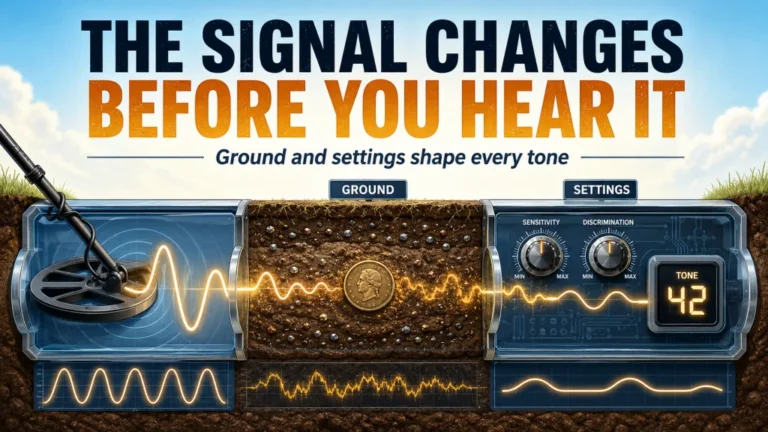
Target ID is useful evidence, not a metal analyzer. Target size, shape, depth, orientation, nearby iron, and ground conditions can move or weaken the displayed number. A repeatable tone from more than one direction often deserves more trust than a single attractive number.
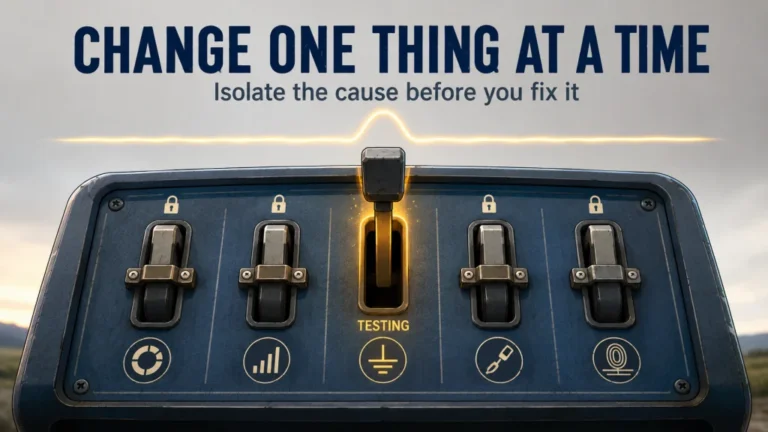
Choose controls that match the amount of learning you will realistically do. Preset modes reduce setup friction, while deeper manual adjustment can help a committed user adapt to difficult sites. More settings are not automatically better when the owner cannot remember what changed or how to return to a stable baseline.
Audio deserves the same attention as the screen. Some users learn faster from a small number of clear tones, while others want more tonal detail. The right system is the one you can interpret after fatigue, wind, traffic noise, and a long run of trash targets.
Waterproofing, Coil Options, and Support
Waterproofing must be checked component by component. Confirm the control box, coil, connectors, headphones, and charging ports for the exact use you have planned. A detector that will stay on dry land does not need expensive submersion capability, but a surf machine needs more than a waterproof coil.
Coil availability matters because the stock coil is a compromise. A smaller coil can improve control and separation in dense trash, while a larger coil may cover open ground faster but add leverage and react to more nearby targets at once. The useful question is not how many coils exist, but whether the sizes you may need are actually available and supported.
Warranty length is only one part of support. Check who handles repairs in the United States, whether common parts remain available, whether firmware updates require special hardware, and whether the seller is authorized. A generous warranty is less useful when the repair path is unclear or the package was assembled from gray-market inventory.
Complete Cost, Not Detector-Only Price
The price on the control box is not always the cost of a workable setup. Depending on the hunt, you may still need suitable headphones, a digging tool, finds pouch, sand scoop, spare charging option, protective cover, or a different coil. Add only what the planned environment requires, but count it before comparing two choices.
Budget-first readers should look for the strongest complete setup they can practice with, not the cheapest detector body or the largest advertised discount. The guide to capable detectors under 500 dollars is the better next step when the spending limit is already fixed.

Fisher F22 is a weatherproof all-purpose metal detector designed for finding jewelry, coins and artifacts. It uses a 9-inch weatherproof search coil and includes a pinpoint function. The detector is designed for straightforward operation across common detecting situations.
Check On AmazonIf you click this link and buy, we earn a commission at no additional cost to you.
Choose the Guide That Matches Your Real Hunt
If you are asking what is the best metal detector, the useful answer begins with a narrower question. What will you search for most often, and where will you search for it? The routes below keep that decision practical without pretending one machine should lead every list of top metal detectors.
Choose one primary route first. You can return for a second route if your plans genuinely span two different hunt types, but do not combine every possible requirement into one shopping list.
- For tiny natural targets and difficult ground, start with choosing a detector for natural gold.
- For dry sand, wet salt, surf, or wading, use the beach detector environment guide.
- For a manageable first machine and a realistic learning curve, follow the first detector selection framework.
- For shorter users and family participation, read the detector fit guide for kids.
- For parks, fields, old home sites, and researched permissions, use the coins and relics detector guide.
If two routes conflict, let the harder ground decide the technology and let the most frequent hunt decide the ergonomics. For example, a reader who mostly searches parks but regularly visits wet salt beaches needs salt stability without giving up manageable controls and comfortable land use. A reader who only walks dry sand on vacation may not need the same level of specialization.
Before comparing machines, it also helps to understand how detector technology responds to targets and soil. After choosing the category, the next performance gain usually comes from learning repeatable setup and recovery habits through these practical metal detecting field techniques.
Minelab Vanquish 340 uses Multi-IQ simultaneous multi-frequency technology and automatically selects settings based on the soil. It includes Park, Field and Beach search modes. The detector weighs 2.6 pounds and collapses to 30 inches for easier transport.
Check On AmazonIf you click this link and buy, we earn a commission at no additional cost to you.
Three Detector Terms to Understand Before You Compare Features
New buyers often see ground balance, discrimination, and operating frequency listed together even though they solve different problems. These terms are useful only when you connect each one to the target and site conditions already chosen.
| Term | Plain-English meaning | What it changes in the field | Common misunderstanding |
|---|---|---|---|
| Ground balance | Adjusts how the detector handles the natural response from soil minerals. | Helps the machine remain stable and recognize targets when the ground itself creates a signal. | Treating one setting as correct for every part of a property. |
| Discrimination | Changes which target responses are accepted, rejected, or assigned different audio. | Can reduce unwanted digging, but aggressive rejection may also hide jewelry, relics, or good targets near trash. | Assuming it can identify unwanted metal perfectly before digging. |
| Operating frequency | Describes how the detector transmits and processes its search signal. | Influences sensitivity to target size and behavior in different ground, but it does not decide performance by itself. | Choosing the largest or most impressive frequency number without considering target and terrain. |
Use these terms as filters, not trophies. Ground balance matters more when mineralization is difficult, discrimination matters when useful targets overlap common trash, and frequency matters only as part of the detector’s complete design and the conditions it must handle.
That is also why a specification sheet cannot replace an evaluation method. Once the terminology is clear, the next step is deciding what evidence supports a recommendation and where its limits begin.

Garrett Vortex VX7 supports selectable 5 kHz, 13 kHz, Multi-Frequency and Multi-Salt operation. It includes a two-tier Target ID system plus notch and iron discrimination controls. Auto ground balance adds another adjustment for changing ground conditions.
Check On AmazonIf you click this link and buy, we earn a commission at no additional cost to you.
How I Evaluate a Detector Without Pretending One Spec Decides It
I use three layers in order: field conditions first, product specifications second, and community field evidence third. Field conditions define the problem. Specifications show whether the machine is designed to address that problem. Community evidence helps reveal repeated limitations, setup confusion, support issues, or strengths that a specification sheet cannot show.
I do not treat popularity as proof of fit. A widely owned detector may be easy to support and learn, which is useful, but that does not make it right for every target or soil. The evaluation has to explain the strongest use case, the primary limitation, who should not buy it, and why another option was excluded.
| Evidence label | What it means | What it does not mean |
|---|---|---|
| Personally Used | I have used the detector in the conditions described. | It does not prove universal performance in every soil, target, or coil setup. |
| Hands-On Inspected | I have physically checked fit, controls, construction, and setup. | It is not a claim of field performance or long-term ownership. |
| Research-Based | The evaluation relies on current manuals, specifications, support information, and recurring community evidence. | It does not imply personal use. |
Those labels matter because a clean boundary is more useful than manufactured certainty. If I have not personally used a machine, I will not write as though I have. Research-based evaluation can still be useful when the sources are current and the recommendation is limited to what the evidence supports.
Before publication, product status must be refreshed. I check whether the model is current, the normal US price rather than a temporary sale, package contents, firmware availability, warranty terms, parts support, and authorized seller status. The last broad product-status review for this guide was completed on July 20, 2026, but readers should still verify the exact package and support terms before buying.
A Five-Minute Buying Check Before You Compare Anything
Use this sequence before opening a comparison chart. It forces the decision into the right order and exposes conflicts early, while they are still easy to solve.
- Name one primary target: natural gold, jewelry, coins, relics, or mixed use with a clear center.
- Name the hardest regular environment: trashy park, open field, mineralized ground, freshwater, dry beach, wet salt, surf, or deeper water.
- Set a physical-fit limit: acceptable operating weight, shaft range, balance, control complexity, and audio style.
- List non-negotiable protection: weather resistance, waterproof coil, or fully submersible control box.
- Calculate complete cost: detector, required recovery tools, audio, power, protection, and any coil needed for the planned site.
Now remove any detector category that fails one of the first four checks. Only compare price and convenience among the options that remain. This is faster than comparing every feature because it prevents an impressive but unsuitable machine from staying in the running.
Field Note: A promising permission property can still produce a poor hunt when the search starts in the wrong part of the parcel. Identify the likely activity area first, then match the detector setup to the soil, trash level, and target size expected there. Machine choice works best when it follows the land decision instead of replacing it.
The same logic protects beginners from overspending. An advanced feature is valuable only when it solves a condition you expect to face and you are willing to learn how to use it. Otherwise, stable operation, good fit, clear feedback, and regular practice will usually produce a better first season.
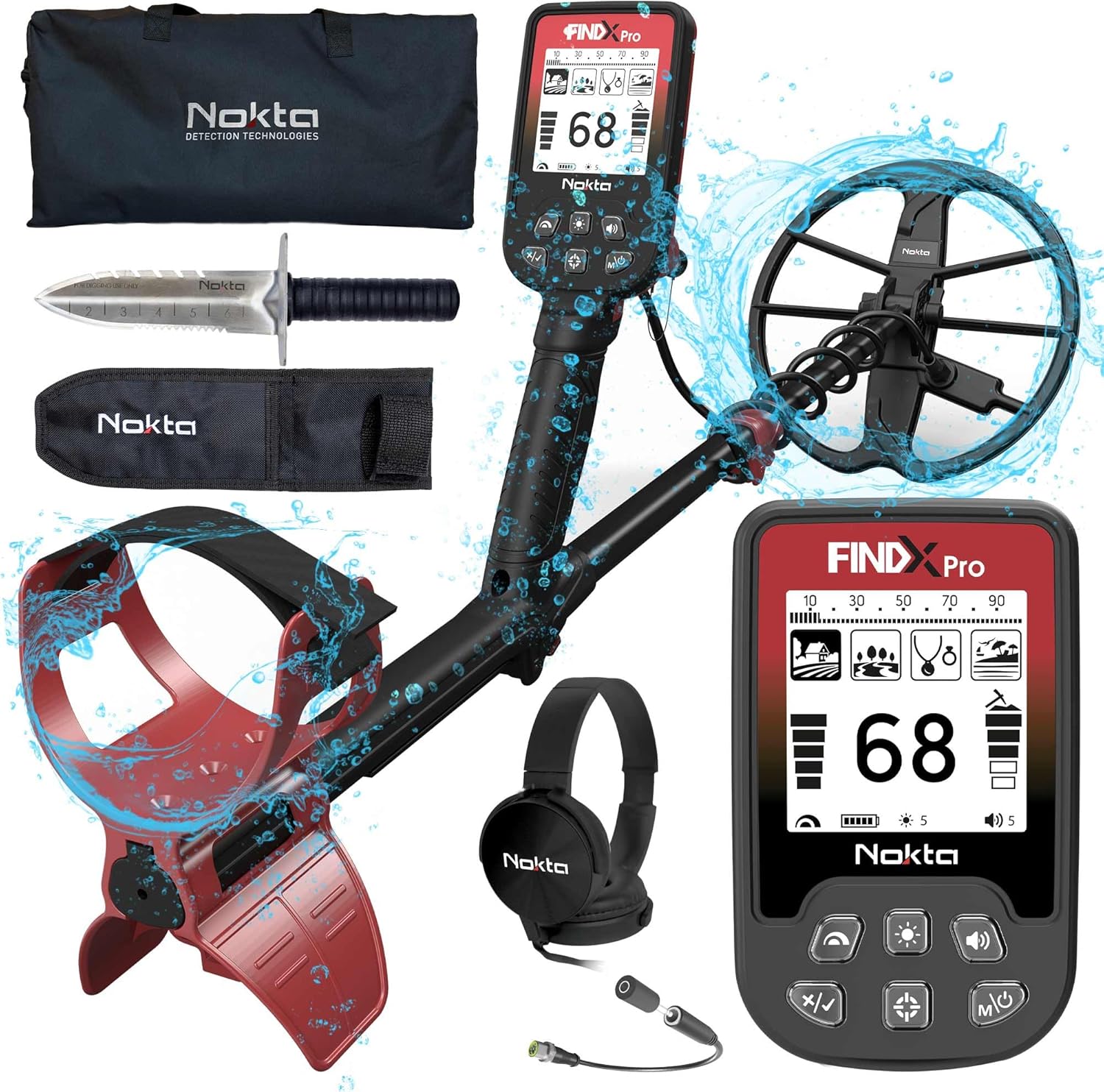
Nokta Findx Pro kit includes headphones, a carrying bag and a premium digger. The detector provides Field, Park, Jewelry and Beach search modes with an 11-inch waterproof DD search coil. It weighs 2.6 pounds and uses an adjustable shaft.
Check On AmazonIf you click this link and buy, we earn a commission at no additional cost to you.
Final Thoughts: Buy for the Hunt You Can Actually Practice
The best metal detector is not the one with the broadest claim or the highest price. It is the one that fits your primary target, stays usable in your hardest regular ground, and feels controlled enough that you keep learning it. Target first, environment second, operating fit third, and price after the unsuitable choices are gone.
I would rather see a new detectorist choose a focused, understandable setup and hunt it regularly than buy an impressive machine for five imagined situations. The land, the target, and the person swinging the coil should make the decision together.
Explore the Right Detector for Your Hunt
Each guide below takes one part of the decision further, so you can compare the requirements that matter without turning the process into a generic ranking contest.
| Guide | What it helps with |
|---|---|
| Detectors for Natural Gold | Matches small-target sensitivity and ground handling to mineralized prospecting conditions. |
| Detectors for Beach Hunting | Separates dry sand, wet salt, surf, waterproofing, and water-use requirements. |
| Detectors for Beginners | Balances ease of learning, useful controls, site compatibility, and room to improve. |
| Detectors for Kids | Prioritizes shaft fit, balance, control, durability, and realistic attention span. |
| Detectors for Coins and Relics | Focuses on separation, target information, iron-heavy sites, fields, parks, and permissions. |
| Detectors Under 500 Dollars | Builds the strongest practical setup when the total spending limit comes first. |
Start with the guide closest to your next five hunts, not the most ambitious trip you might take someday.
FAQs
🧭 What is the best metal detector for a beginner?
The best beginner choice matches the person’s regular ground, target, physical fit, and willingness to learn. Easy controls matter, but they do not compensate for poor salt handling, uncomfortable balance, or the wrong target focus.
🪙 Can one detector find gold, coins, jewelry, and relics?
Many detectors can respond to all four, but their effectiveness changes with target size, soil, salt, trash, and settings. Choose around the hardest regular use rather than the longest list of metals on the box.
🌊 Do I need a fully waterproof metal detector?
Only if the control box may be submerged or exposed beyond its stated protection. Dry-land users may need no more than weather resistance and a waterproof coil, while surf and wading require exact component ratings.
🔢 How reliable is Target ID?
Use it as evidence, not proof. Depth, orientation, size, nearby iron, and ground conditions can change the number, so repeatable audio and a consistent response from more than one direction still matter.
💰 Does a more expensive detector always find deeper targets?
No. Useful depth depends on the target, soil, coil, settings, and the detector’s ability to handle the ground. Higher price may add control, separation, waterproofing, or convenience without creating a universal depth advantage.
⚖️ Should I choose fewer features if the detector fits better?
Often, yes. A comfortable, stable detector with controls you understand is usually more useful than a feature-heavy machine you cannot swing accurately or set up with confidence.
Sources and References
These references support the technical distinctions used in this decision framework, including Target ID limits, ground balance, frequency behavior, waterproof components, and real-ground interpretation.
- Minelab, How Detectors Work: general technical background on electromagnetic detection, Target ID, operating frequency, and ground balancing.
- Minelab USA, Frequently Asked Questions: practical manufacturer guidance on ground balance, discrimination, target response, waterproof components, and changing soil conditions.
- Garrett Metal Detectors, User Manual: reference material for interpreting Target ID, ground balance, search modes, coil control, and operating setup.
- DetectorProspector, Target ID and Target Size Discussion: community technical discussion showing why target size and ground conditions limit simple metal-type assumptions.
Manufacturer specifications, manuals, firmware pages, warranty terms, and seller status should be checked again for the exact detector and package being considered.