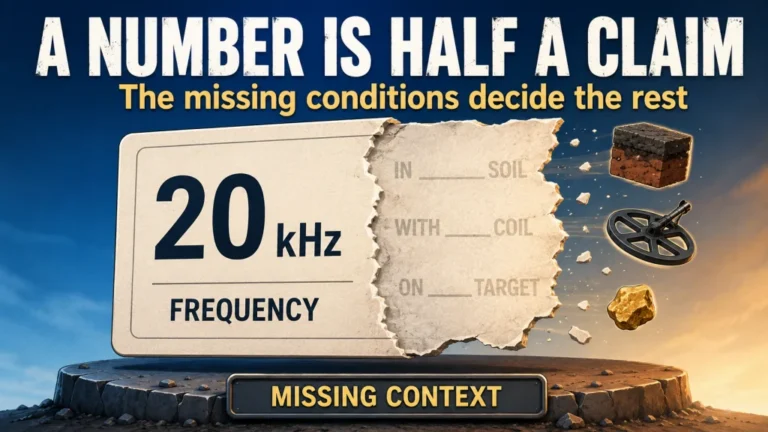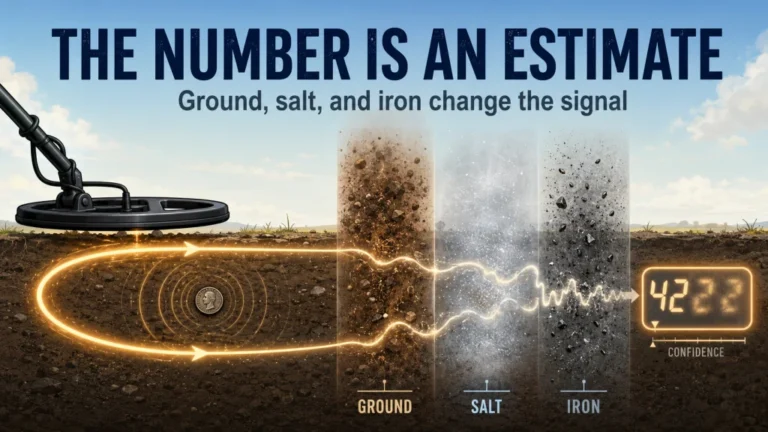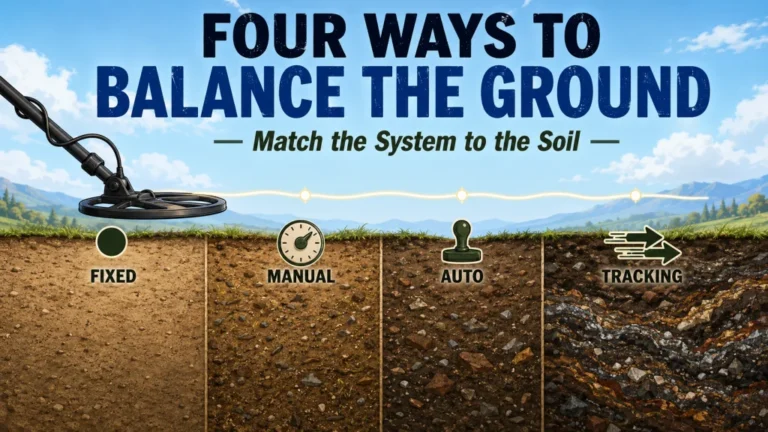
The main hobby detector technologies are single-frequency VLF, pulse induction, and simultaneous multi-frequency, but none is automatically best. The useful choice depends on the target, soil, conductive salt, trash density, discrimination needs, physical fit, and budget. I treat the technology label as the beginning of the decision, not the answer. By the end, you should know which operating approach fits your ground and what specifications still need checking before you buy.

Start With the Ground, Not the Technology Label
Metal detector technology types change how a machine transmits a signal, reads the return, and separates a possible target from ground response. That affects stability in conductive salt, behavior in mineralized soil, Target ID, and the amount of trash information you receive. It does not create a permanent winner. A technology that makes sense in a clean inland park may be the wrong trade-off on wet salt sand or in highly mineralized gold ground.
A common buying mistake is reversing that order. A buyer learns that one label is newer, deeper, or more advanced, then tries to force every hunt into that label. A better approach is to understand how a detector creates and interprets a signal, then ask what the site will do to that signal. The ground and target should choose the tool, not the wording on the control box.
Key point: Technology describes the detector’s operating method. Performance still depends on implementation, coil choice, settings, target size, target conductivity, soil, salt, and the operator’s ability to interpret the response.
That distinction matters because two detectors using the same broad technology can behave very differently. One may prioritize fast separation in iron, another may favor stability, and another may be built around small-target sensitivity. Learn the operating families first, then compare the complete machine within the family that fits your hunt.
Single-Frequency VLF Gives You Detailed Target Information
In hobby detecting, VLF commonly refers to an induction-balance detector that sends a continuous electromagnetic signal while a receiving circuit measures changes caused by the ground and metal targets. The detector can compare parts of the returned signal, including phase and strength, to estimate conductivity. That information supports numerical Target ID, multiple tones, notch patterns, and discrimination controls. Those features are why this technology remains practical in parks, fields, yards, and many permission properties where deciding what not to dig matters.
A single-frequency machine processes one operating frequency at a time. Some machines use one fixed frequency, while others let the operator select from several choices before hunting. A selectable machine still operates on one selected frequency at that moment. Changing the selection may help move away from electrical interference or alter sensitivity toward certain target sizes and conductivities, but it does not turn the detector into a simultaneous multi-frequency system.
Where VLF Usually Makes Sense
Single-frequency VLF is often a sensible fit when the site contains enough modern iron and aluminum trash that target information can save time. A coin hunter in a park may want repeatable tones and a useful visual ID before cutting a plug. A relic hunter around an old homesite may need adjustable discrimination but should keep it conservative enough to avoid rejecting masked nonferrous targets. A gold hunter in mild ground may value sensitivity to very small, low-conductive targets more than broad salt handling.
The mistake is treating discrimination as a metal analyzer. The coil reads the combined response of the target, nearby trash, soil minerals, target orientation, and depth. A clean air-test ID can shift in mineralized soil or when a good target sits beside iron. Discrimination is a decision aid, not proof of what is underground.
Where the Trade-Off Appears
Conductive wet salt and strong mineralization can create a large ground response that competes with the target signal. Ground balance, salt modes, sensitivity changes, and careful setup can help, but the amount of help depends on the detector’s design and the exact conditions. A statement such as “VLF does not work on beaches” is too broad because dry sand, freshwater sand, damp transition zones, and saturated ocean sand are different operating problems.
Field Note: I have seen a setup run quietly in open pasture and become noticeably less stable near an old foundation where the soil and buried iron changed within a short distance. The lesson is not that VLF failed. The lesson is to rebalance, listen to the ground, and judge the site before blaming the technology.
For a deeper decision-level explanation, continue with how single-frequency VLF behaves in real ground. That page can take the operating method further without turning this overview into a specification manual.

The Garrett Viper is a 6 x 11 inch DD search coil designed for the Garrett AT Pro, AT Gold, and AT Max. A protective search coil cover is included with the coil. Its narrower elliptical format provides another coil option for compatible AT Series detector setups.
Check On AmazonIf you click this link and buy, we earn a commission at no additional cost to you.
Pulse Induction Samples the Signal After Each Pulse
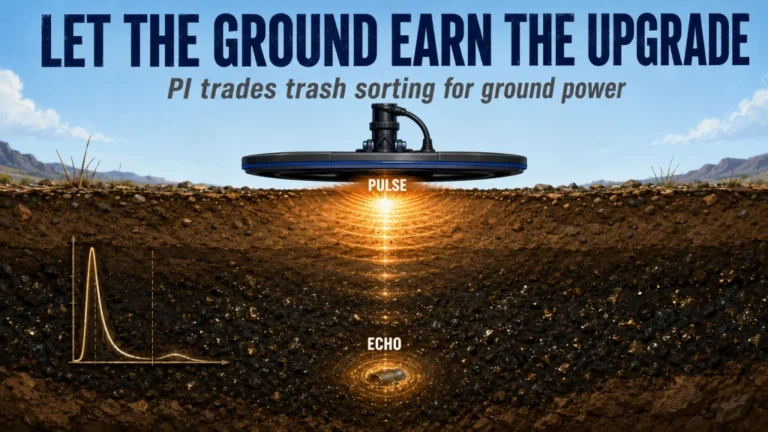
A pulse induction detector energizes the search coil in short pulses, switches the transmit field off, and samples the decaying response. Conductive targets create their own decaying electromagnetic response after the pulse ends. The detector analyzes that response over carefully chosen time windows. This pulse-and-sample method is fundamentally different from a continuously transmitting induction-balance system.
The practical advantage appears when difficult ground or conductive salt overwhelms a continuous-wave detector. Many PI designs can reduce the effect of those conditions and retain more useful target response. That is why PI is commonly associated with mineralized goldfields, difficult black sand, and some saltwater work. The accurate claim is not that PI always goes deeper, but that it may lose less usable performance than a VLF detector when the ground becomes the limiting factor.
PI Is Not Immune to Ground
Hot rocks, changing mineralization, salt response, pulse timing, ground-balance design, and coil configuration still matter. A simple PI that behaves calmly in one beach condition can false on variable mineralized ground. A ground-balancing PI can address more difficult soil, but that feature also introduces settings and trade-offs. The letters PI alone do not tell you how well a machine handles your specific site.
This is also why air tests are weak evidence for a VLF vs PI metal detector decision. An air test removes the exact soil response that often creates the reason to choose PI. Compare the technologies in the ground type you intend to hunt, using targets that resemble what you actually want to find.
Expect a Discrimination Trade-Off
PI detectors generally provide less reliable target classification than the detailed conductivity-based ID available from many VLF and simultaneous multi-frequency machines. Some PI systems offer iron checks, timing-based clues, or tonal differences, but those tools should not be treated as a complete substitute for VLF-style discrimination. In a clean goldfield or open beach, digging more signals may be acceptable. Around a nail-filled homesite, that same behavior can turn a short hunt into a long exercise in recovering iron.
The question is therefore not whether PI is more powerful. Ask whether difficult ground is costing enough performance to justify weaker target sorting, a different audio language, possible extra weight, and often a higher total cost. Read the field trade-offs of pulse induction before choosing it solely because someone called it deeper.

The GADFISH Sand Scoop kit includes a sand scoop, long pole, sand shovel, and assembly hardware. The scoop is made from 201 stainless steel and can be used alone or with the detachable extension pole. It is designed for sifting and recovering targets during beach and underwater searches.
Check On AmazonIf you click this link and buy, we earn a commission at no additional cost to you.
Multi-Frequency Can Mean Two Different Things
The phrase multi-frequency is often used too loosely. A selectable-frequency detector lets you choose one frequency and run it alone. A simultaneous multi-frequency detector transmits, receives, and processes information from more than one frequency during the same search cycle. Both give the operator more options than a fixed single-frequency machine, but they do not perform the same kind of signal analysis.
Simultaneous processing can help a detector compare target and ground behavior across a broader signal set. In practical terms, a well-implemented system may provide useful target response across a wider range of conductivities and better stability in wet salt than a conventional single-frequency setup. That does not mean every simultaneous system uses the same frequencies, weighting, filtering, or target-processing method. The implementation is the technology, not just the badge.
Selectable Frequencies Give Control One Choice at a Time
Selectable frequency is useful when the operator knows why a change is needed. One selection may behave better around a particular type of electrical interference. Another may favor sensitivity to smaller low-conductive targets, while a lower choice may suit a different target mix or ground response. The important limitation is that the detector is still making its decision from the selected operating channel rather than concurrently processing several.
A buyer should not reject selectable frequency as old or accept simultaneous processing as automatic proof of superiority. A focused single-frequency design can still be a good fit for a narrow task in suitable ground. Simultaneous processing usually earns its value when the hunt changes between target types or environments, especially when wet salt is part of the plan.
Why Implementation Matters More Than the Frequency Count
Manufacturers do not all publish the exact transmitted and processed frequency sets, and a larger claimed number does not automatically produce better field performance. Search modes can weight the available signal differently. Recovery speed, ground filtering, coil design, sensitivity limits, Target ID mapping, and software all shape what reaches your headphones and display. Comparing frequency counts without those details is like comparing trucks only by the number of gears.
When reviewing a VLF, PI, and multi-frequency metal detector, look for independent evidence from the same kind of ground you plan to hunt. Pay attention to stability, target separation, ID behavior at the edge of detection, and what settings were used. The dedicated guide to selectable and simultaneous multi-frequency systems explains those distinctions in more detail.
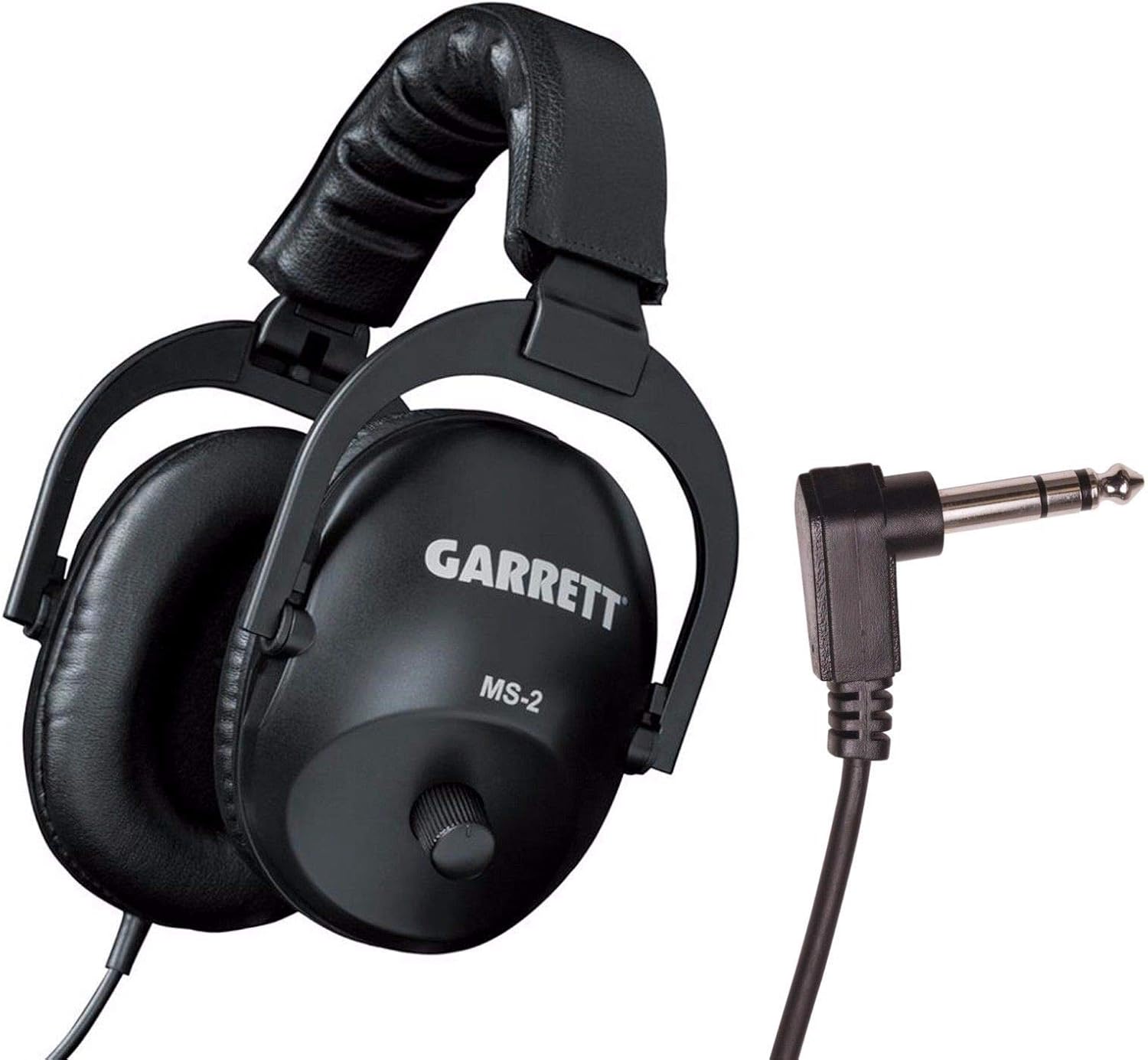
The Garrett MS-2 Headphones use a 1/4 inch right-angle stereo plug and are made for metal detecting use. They include volume control for adjusting signal levels and improving weak-signal listening. The design also uses padded ear cups, an adjustable headband, and a reinforced coiled cable.
Check On AmazonIf you click this link and buy, we earn a commission at no additional cost to you.
Compare the Trade-Off That Matters at Your Site
A useful comparison does not ask which technology wins everywhere. It asks which weakness will cost you the most at the site you actually hunt. Trash may make target sorting the priority. Wet ocean sand may make salt stability the priority. Strong mineralization may make ground handling more important than a polished Target ID screen.
| Decision factor | Single-frequency VLF | Pulse induction | Simultaneous multi-frequency |
|---|---|---|---|
| Target information | Often detailed tones, ID, notch, and discrimination | Usually more limited classification and more dig decisions | Often detailed ID across a broad target range, depending on processing |
| Mild inland soil | Common practical fit | May add little if ground is not limiting performance | Versatile, but value depends on the rest of the machine |
| Strong mineralization | Can lose stability, depth, and ID accuracy as ground response increases | Often retains more usable performance, depending on timing and ground balance | Can improve stability and ID, but results vary by implementation |
| Wet conductive salt | Single-frequency performance may require compromise | Commonly suited to salt conditions, with design-specific limits | Often a strong choice when the salt-processing mode is well designed |
| Dense modern trash | Useful discrimination and target separation when recovery is adequate | More digging and fewer reliable classification tools | Can combine broad target response with detailed sorting, depending on recovery and coil |
| Buying risk | Choosing frequency without matching target and soil | Buying for claimed depth while ignoring trash and weight | Assuming all systems process the same frequencies in the same way |
The table is a starting filter, not a promise. Detection depth still depends on target size and material, soil, coil, settings, target orientation, and electromagnetic noise. Before treating any depth number as useful, read what actually controls metal detector depth and check whether the test conditions resemble your ground.
A good technology match removes the largest obstacle without creating a worse one. If a site is mild but full of aluminum and nails, giving up target information for ground-handling capacity you do not need is a poor exchange. If wet salt keeps a single-frequency machine unstable, better discrimination on paper does not help when the detector cannot produce a clean signal.
Use This Seven-Part Technology Decision
I make the technology decision by removing assumptions in a fixed order. Start with the target and site, then decide how much target sorting the hunt requires. Weight and budget come later because a machine that is comfortable and affordable still has to function in the ground where it will be used.
- Target type: Decide whether the priority is tiny natural gold, jewelry, coins, relics, or mixed hunting.
- Soil response: Identify whether the ground is mild, moderately mineralized, highly mineralized, or full of changing hot rocks.
- Salt exposure: Separate dry sand and freshwater from damp ocean sand, wet salt, surf, and submerged use.
- Trash density: Estimate how often useful targets will sit among nails, foil, pull tabs, and other modern debris.
- Discrimination needs: Decide whether you can dig nearly every signal or need dependable sorting to use the site efficiently.
- Physical fit: Check total weight, balance, shaft adjustment, grip position, control access, and the coil you will actually swing.
- Complete budget: Include the detector, suitable coil, headphones, charging or batteries, digging tools, protection, and any required water accessories.
Budget usually follows design and market position, but treat that as a pattern, not a rule. Single-frequency VLF commonly provides the lowest-cost entry point, while PI and simultaneous multi-frequency options often begin higher because they are frequently built for more demanding ground or broader operating conditions. Compare the complete package, since the apparent price gap can shrink or reverse after adding the coil, headphones, power setup, or water accessories required for the actual hunt.
Run the list in that order. A person hunting mild school grounds with limited time may put trash handling and easy Target ID ahead of difficult-ground capacity. A detectorist working mineralized open ground for natural gold may accept less discrimination because stable target response is the bigger problem. A beach hunter who stays on dry upper sand is making a different technology decision from someone entering wet salt and surf.
Decision rule: Choose the technology that handles your hardest frequent condition, not the rare condition you may try once. Then verify that the complete detector remains usable in your normal sites.
Do not stop at the operating family. Controls, recovery speed, ground balance, audio, waterproofing, coil availability, warranty, and service can separate a good fit from a frustrating one. The next step is learning which detector specifications change field performance and which are mostly marketing shorthand.

The Garrett Edge Digger is a metal detecting recovery tool supplied with carrying accessories. The package includes a carry sheath and a camo canvas finds recovery bag. Its digging blade uses a serrated edge for working through soil while recovering detected targets.
Check On AmazonIf you click this link and buy, we earn a commission at no additional cost to you.
What the Technology Label Cannot Tell You
Two machines can share the same operating family and still differ in recovery speed, audio quality, ground tracking, target separation, coil selection, and physical balance. Those differences often decide whether a detector works in a nail bed, stays stable near power lines, or becomes tiring after an hour. Technology sets the broad behavior, while engineering choices determine how usable that behavior becomes.
The label also cannot tell you whether the control box is waterproof, whether the stock coil suits tight trash, whether replacement parts are available, or whether the interface makes sense to a beginner. These are not side issues. A technically capable detector that does not fit the user’s body, site, or learning tolerance is still the wrong purchase.
Look for evidence that names the soil, target, settings, coil, and test method. Give less weight to isolated air tests, unexplained depth claims, and statements that one technology is always superior. Field evidence becomes useful only when its conditions are close enough to your own hunt to support the same decision.
Once those conditions are named, the choice becomes much simpler. You are no longer shopping for the most advanced term. You are choosing the signal-processing approach that removes the biggest real obstacle while preserving the information and usability you need.
Final Thoughts: Match the Signal Method to the Site
Single-frequency VLF, PI, and simultaneous multi-frequency each solve a different mix of problems. VLF often gives strong target information in manageable ground, PI can retain useful response when mineralization or salt becomes the limiting factor, and simultaneous processing can provide broad versatility when its implementation is sound. None of those statements is universal without the site conditions attached.
I would choose the target and ground first, identify the hardest condition that will occur regularly, and then decide how much discrimination, weight, complexity, and cost I am willing to trade for better handling of that condition. That sequence protects you from buying a technology label instead of a detector you can use well.
Explore Each Detector Technology in More Detail
The three guides below take each operating method beyond the overview and explain the field conditions that change its strengths and limitations.
| Guide | What it helps with |
|---|---|
| Single-Frequency VLF Explained | Understand continuous-wave operation, Target ID, discrimination, frequency choice, and ground-related limits. |
| Pulse Induction Explained | See how pulse timing, ground response, salt, hot rocks, and weaker discrimination affect the decision. |
| Multi-Frequency Systems Explained | Separate selectable operation from simultaneous processing and evaluate implementation rather than frequency count. |
Use the guide that matches your likely operating method, then return to the specifications and site conditions before making a final equipment choice.
FAQs
⚖️ Is VLF or PI better for a beginner?
VLF is often easier where target ID and discrimination help control how much trash you dig. PI may make more sense when difficult mineralized ground or salt is the main obstacle and you accept less target classification. Choose by the site, not experience level alone.
🏖️ Do I need multi-frequency for saltwater beaches?
Simultaneous multi-frequency is often a practical choice for wet conductive salt, but PI can also be well suited to that condition. Dry upper sand is less demanding. Confirm waterproofing separately because the coil, control box, and headphones may have different protection limits.
⛏️ Does pulse induction always detect deeper than VLF?
No. PI often gains an advantage when mineralization or conductive salt causes a VLF detector to lose usable performance. In mild ground, target size, coil, settings, and detector design may matter more than the broad technology label.
📡 Is selectable frequency the same as simultaneous multi-frequency?
No. Selectable frequency runs one chosen frequency at a time. Simultaneous multi-frequency transmits, receives, and processes information from more than one frequency during the same operating cycle.
🧲 Can a PI detector reject iron?
Some PI detectors provide iron checks, tonal clues, or timing-based controls, but their classification is generally more limited than VLF-style Target ID and discrimination. Treat those tools as digging aids, not perfect identification.
🔢 Does a higher frequency always find smaller gold better?
Frequency influences sensitivity, but coil size, ground mineralization, settings, target shape, and the detector’s complete design also matter. A higher number does not guarantee better results when the ground response forces the sensitivity down.
Sources and References
These technical and field references support the operating distinctions, ground-response limits, and discrimination trade-offs explained above. Manufacturer material is used for system definitions, while independent field material is used to check how those definitions hold up in real soil and mixed-target conditions.
- Minelab, Inside EQUINOX: Exploring the Technology Behind the Detector: used for the distinction between selectable single-frequency operation and simultaneous transmission, reception, and processing.
- Minelab, How Detectors Work: used for general explanations of Target ID, ground balance, and frequency-based detector behavior.
- White’s Electronics and Garrett Electronics, US8749240B1: used for the pulse induction transmit, field-collapse, eddy-current, and receive sequence.
- DetectorProspector, Metal Detector Technical Specification Notes: used for the practical distinction between induction-balance and pulse-induction systems, along with ground and frequency limitations.
- DetectorProspector, Tune Out Nails and You May Miss Gold: used for independent field evidence on how mineralization, mixed targets, depth, and sweep conditions can change discrimination results.
The sources describe operating principles and observed limitations, not universal performance guarantees. Field results still need to be interpreted against the target, coil, settings, soil, salt, and trash conditions present during the test.