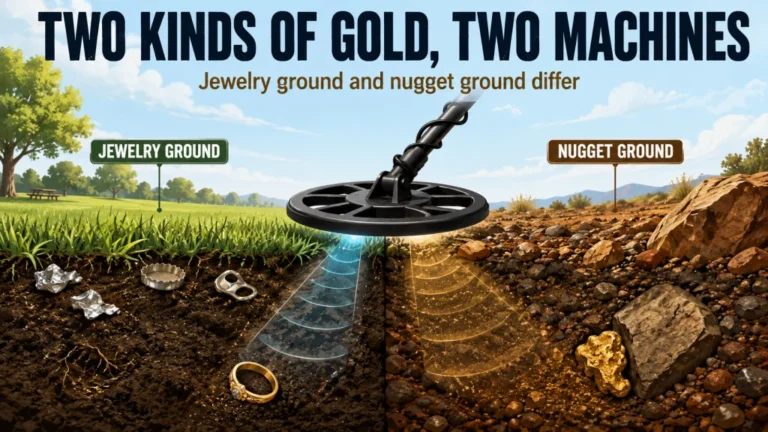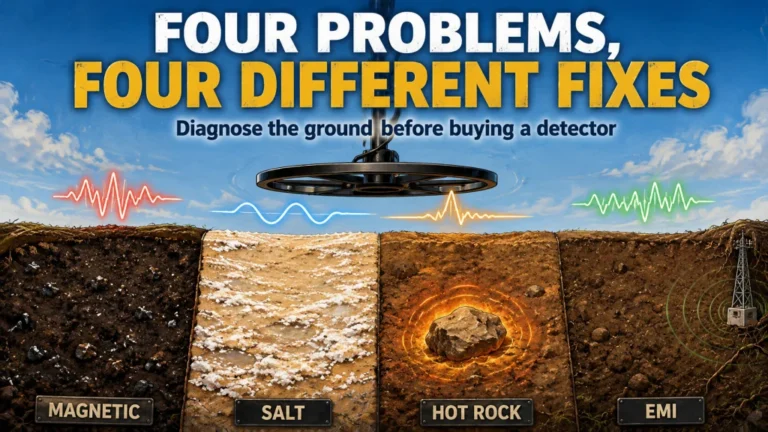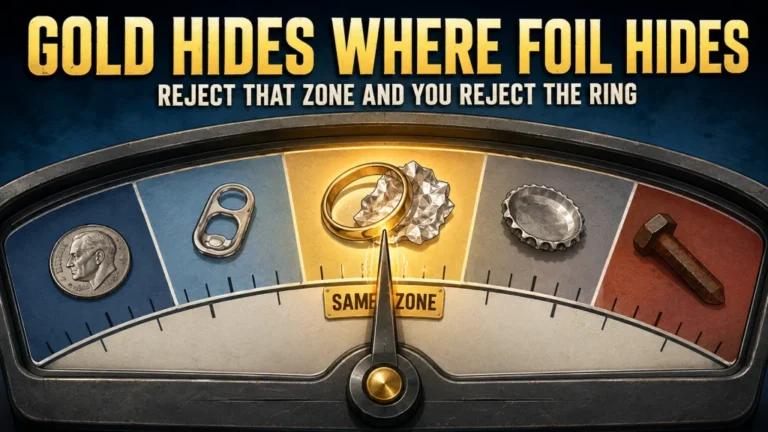
The best metal detectors for beach use are not chosen by the word “beach” on a product page. Dry sand, wet salt, black sand, freshwater, surf, and diving each create a different problem for the detector and for the person carrying it. I narrow the choice by salinity, mineralization, the deepest component that will enter the water, target type, waves, audio, weight, service, and budget. By the end, you should know which beach category fits your hunt and which specifications must be verified before you buy.
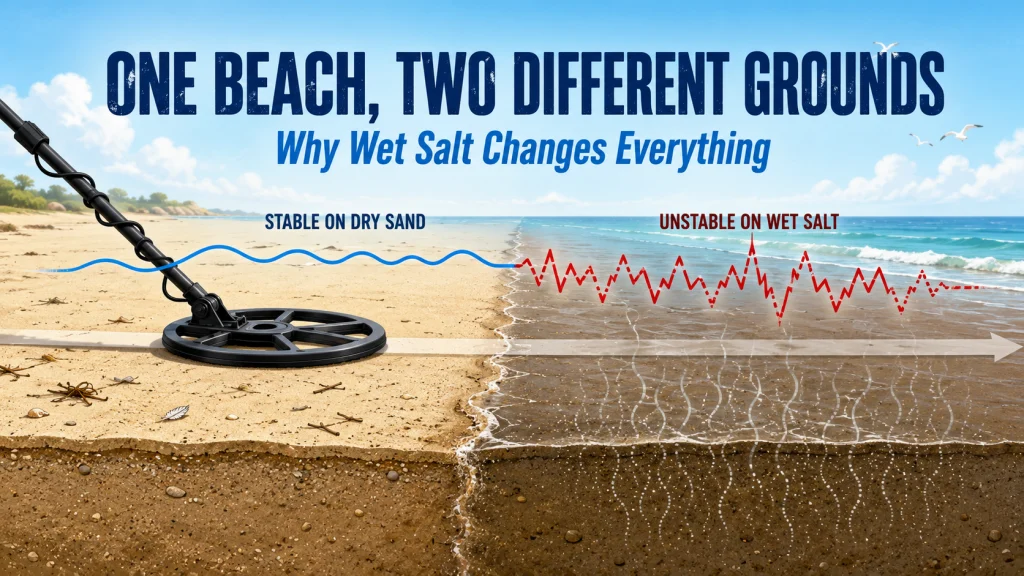
One Beach Can Require Several Different Detectors
The phrase best metal detectors for beach hides the decision that matters most: where on the beach will the coil, control box, and audio system actually go? A machine that behaves well on dry towel-line sand may become unstable when the same sweep reaches wet conductive salt. A detector that handles wet salt may still be unsuitable for chest-deep water because only its coil is submersible.
I start with the operating zone, not the price tag. That keeps a buyer from paying for diving capability when every hunt will stay above the tide line, or buying a land detector and discovering that the control box cannot survive the first wave. Readers still comparing the wider equipment landscape should begin with choosing a detector by hunt type, then return here to separate the beach environments.
| Beach zone | Main problem | Specification that decides the fit |
|---|---|---|
| Dry sand | Trash density, coverage, and fatigue | Weight, coil size, recovery behavior, and target response |
| Wet salt | Conductive salt signal | Salt-ground handling and stable beach operation |
| Black sand | Magnetic mineralization layered with salt | Ground handling, usable sensitivity, and stable audio |
| Freshwater shore | Local minerals, iron, and mixed recreational trash | Ground balance, separation, and the required water rating |
| Surf and shallow wading | Waves, coil drag, splashes, and changing water depth | Full-system submersion limits and underwater audio |
| Snorkeling or diving | Pressure, depth, buoyancy, control access, and recovery | Rated operating depth for the complete detecting system |
This table is the first filter, not a ranking. Once the operating zone is clear, the rest of the specifications stop looking like marketing language and start becoming practical limits.
Dry Sand Rewards Coverage More Than Water Capability
Dry sand above the recent wet line is usually the least demanding beach environment for the electronics. The more common problems are bottle caps, foil, pull tabs, tent stakes, and wide areas that punish a heavy setup. For that work, the best beach metal detector is often the one a person can swing level for the whole planned hunt, not the one with the deepest water rating.
Coil choice matters because a larger coil covers open sand faster but can become tiring and awkward around benches, access paths, volleyball areas, and dense trash. A smaller coil gives up some coverage yet makes it easier to separate targets when several pieces of metal sit close together. The practical question is whether the beach is a broad low-trash sweep or a compact activity area where target separation matters more than raw ground coverage.
Field Note: I treat a machine that becomes nose-heavy during a long hunt as a performance problem, even if its electronics look excellent on paper. A lifted coil at the outside of every swing leaves thin strips of poorly searched sand, and that lost coverage does not appear in a specification table.
A first-time buyer commonly pays for submersion capability because “beach” sounds like “water.” If the real plan is dry sand after work, that money may be better reserved for a balanced shaft, a coil suited to local trash, a reliable digging tool, and enough time to learn the target responses.

The Garrett ACE 300 uses a 0–99 digital target ID scale and improved iron resolution to help separate desirable targets from common trash. Its electronic pinpointing mode helps narrow the target location before recovery. The detector also provides adjustable frequency and includes a protective searchcoil cover.
Check On AmazonIf you click this link and buy, we earn a commission at no additional cost to you.
Wet Salt Is an Electrical Ground Problem
Damp and wet ocean sand contains dissolved ions that conduct electricity. The detector can respond to that broad conductive ground as well as to the coin or ring under it, which is why a machine that sounds calm on dry sand may chatter, false, or lose usable sensitivity at the waterline. A metal detector for saltwater beach use therefore needs proven salt-ground handling, not merely a waterproof coil.
Simultaneous multi-frequency designs and pulse induction designs address difficult beach ground in different ways. Multi-frequency systems can provide useful target information and discrimination while managing the salt signal, although the quality of that implementation still varies by machine and mode. Pulse induction systems can remain stable in conductive or mineralized ground, but they generally ask the user to dig more iron and trash because target identification is more limited.
The technology label alone is not enough. I look for a dedicated beach or salt mode, clear manufacturer instructions for wet salt, and reports that distinguish wet-sand stability from dry-sand performance. The explanation of how simultaneous multi-frequency detection works helps clarify why transmitting and processing several frequencies is different from manually selecting one frequency at a time.
For a buyer who knows the coil will spend most of the hunt in wet ocean sand, the next useful step is the focused guide to choosing for conductive saltwater beaches. That comparison should be made before water depth or accessory packages are allowed to distract from the ground problem.

The Nokta Triple Score uses simultaneous multi-frequency technology and offers 4 kHz, 15 kHz, 20 kHz, and Multi frequency options. Its IP68 housing is rated for complete submersion to 16 feet, and the listing specifically describes operation in wet sand and salt water. The Pro Pack includes two search coils and Bluetooth headphones.
Check On AmazonIf you click this link and buy, we earn a commission at no additional cost to you.
Black Sand Can Add Mineralization on Top of Salt
Black sand is not one universal material, but dark beach layers often contain concentrations of heavy minerals such as magnetite or ilmenite. Those layers can create a strong ground response, and on an ocean beach the detector may need to handle magnetic mineralization and conductive salt at the same time. A setting that is stable on ordinary wet sand may become noisy as soon as the coil crosses a narrow black streak.
The mistake is trying to force maximum sensitivity through ground the machine cannot process cleanly. A lower but stable setting can make a faint target easier to recognize than a higher setting buried under constant ground noise. Ground balance, beach mode, recovery behavior, and coil control all affect the result, but no adjustment can turn a detector poorly matched to that ground into an ideal black-sand machine.
Black sand also changes along the beach. A detector may run well for several hundred yards and then struggle in a concentrated patch sorted by waves. That is why I treat mineralization as a site condition to test, not as a permanent label attached to an entire coastline.
Freshwater Removes the Salt Problem, Not Every Ground Problem
Freshwater beaches usually do not create the same broad conductive response as wet ocean sand, so a capable single-frequency VLF can remain a reasonable choice when the local soil is mild. The decision still depends on mineralization, iron content, target density, and whether the machine will stay on shore or enter the water. Freshwater is easier than saltwater for many detectors, but it is not automatically easy ground.
Swimming areas concentrate modern jewelry, coins, foil, fishing tackle, and steel objects in a relatively small space. That makes target separation and iron handling useful, especially around docks, picnic access, and the shallow drop-off where people stand and play. In a cleaner rural swimming hole, ground balance and water coverage may matter more than rapid separation.
A buyer who will hunt lake and river beaches should use the dedicated guide to matching a detector to freshwater shores. That route avoids paying for saltwater processing that may never be needed while still checking the exact submersion limit for the coil, control box, cable connections, and audio equipment.
This is also where the phrase “waterproof” causes expensive confusion. A freshwater detector can have a submersible coil while the display and controls remain splash-resistant only, so the deepest planned operating point must be defined before the purchase.
Surf and Shallow Wading Turn the Detector Into a Complete System
Once waves can reach the control box, water capability stops being an accessory question. The detector housing, coil, cable connection, battery compartment, headphone port, and any attached audio connector must all be approved by the manufacturer for the depth and duration involved. A waterproof beach metal detector is only as water-ready as its least protected required component.
Surf also changes how the machine handles. Water pushes against the coil, loose sand shifts underfoot, and a wave can lift or twist a broad solid coil that felt effortless on dry ground. A lighter open-spoke coil may reduce drag, but the exact choice still has to balance coverage, target size, local surf, and the detector’s approved coil options.
- Confirm the control box rating, not just the search coil rating.
- Confirm the maximum depth and any manufacturer limit on duration or water type.
- Confirm that the installed headphone cap, connector, or waterproof headphones complete the seal.
- Confirm whether wireless audio stops working underwater and what wired accessory is required.
- Confirm that charging, external battery use, or USB connections are prohibited while submerged.
- Confirm the rinse, drying, seal inspection, and corrosion-care instructions after salt exposure.
The most common failure in this checklist is not the coil. It is an uncovered port, a non-waterproof headphone system, a control pod rated only for rain, or an accessory connection that changes the manufacturer’s water protection. The guide to waterproof detector specifications explains how to read those component limits without treating one adjective as permission to submerge everything.
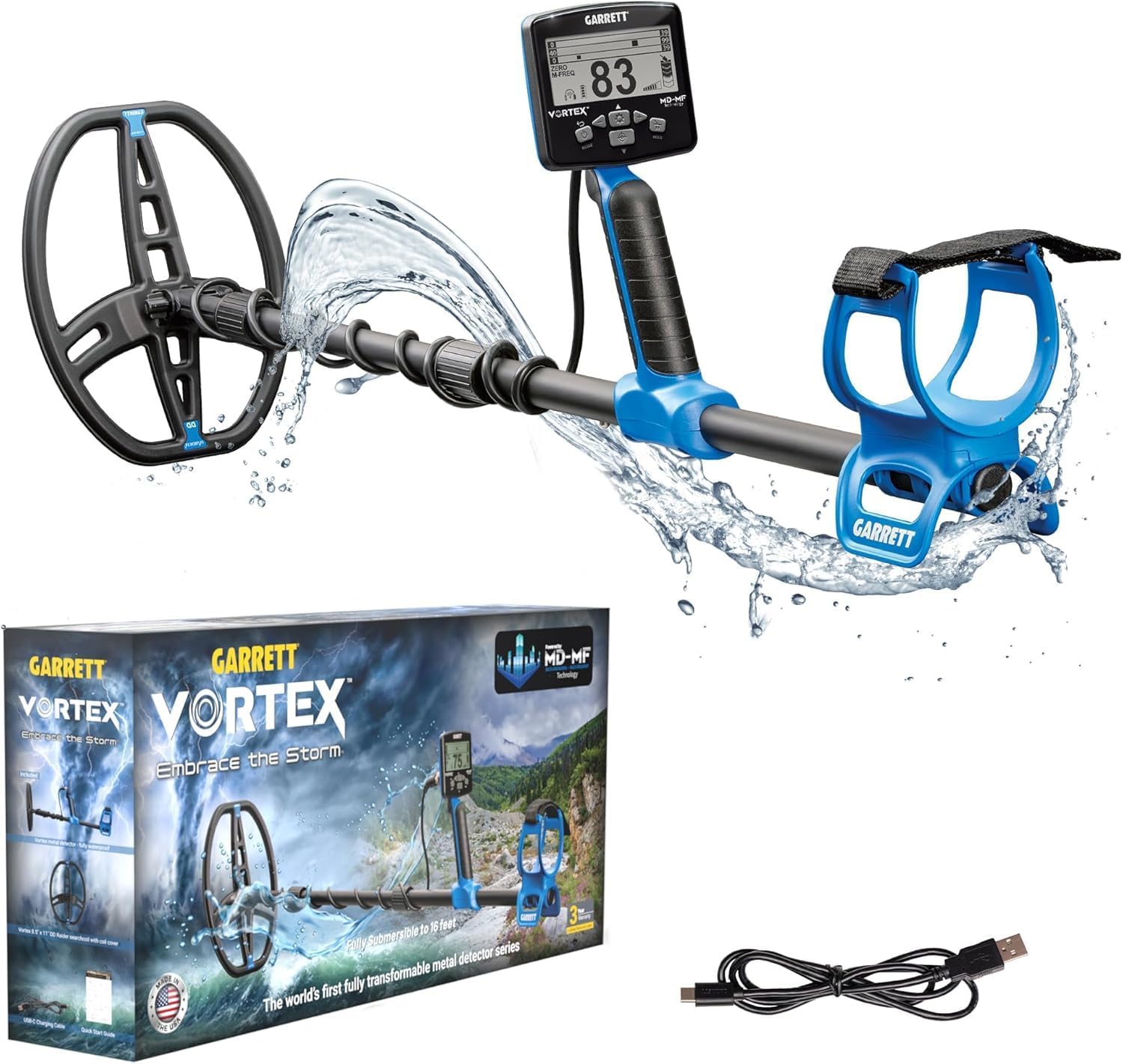
The Garrett Vortex VX9 is an all-terrain detector rated for complete submersion to 16 feet. Amazon describes it for detecting in lakes, streams, and ocean environments. Its waterproof construction makes the detector suitable for hunts where waves or changing water depth can submerge more than just the search coil.
Check On AmazonIf you click this link and buy, we earn a commission at no additional cost to you.
Snorkeling and Diving Are Separate Equipment Categories
Snorkeling may keep the person near the surface, but the control unit can still be held below the water for long periods. Diving adds greater pressure, limited access to controls, buoyancy, visibility, and a more demanding recovery process. A machine approved for shallow wading should never be assumed suitable for diving simply because it survived a brief dunk.
For either activity, the rating must apply to the complete detector at the planned depth. The required underwater headphones or sealed audio connection must be identified before the hunt, and the user must verify whether the supplied headphones are waterproof or only intended for land use. Wireless radio links also commonly lose usefulness underwater, so the audio path needs to be planned as carefully as the detector body.
A full-size land-style detector can also become awkward below the surface even when its enclosure is rated deeply enough. Shaft length, coil buoyancy, control placement, hardwired connections, attachment points, and the ability to hear or feel a target all become practical selection factors. These are handling questions, not decorative features.
Readers planning regular submerged searches should move to choosing a detector for underwater use. That category can separate shallow submersion from equipment designed around snorkeling or diving instead of forcing every water hunt into the same recommendation.
My Beach Selection Framework
I use the following sequence because each answer removes machines that cannot safely or effectively do the job. Starting with price reverses that logic. It encourages the buyer to defend a purchase before the beach conditions have even been defined.
- Salinity: Decide whether the coil will see dry sand, damp ocean sand, saturated salt, brackish water, or freshwater.
- Black sand: Look for dark heavy-mineral streaks and find out whether the local shoreline is known for difficult mineralization.
- Maximum operating depth: Measure the deepest point the control box, coil, and audio connection may reach, not merely the water depth around the user’s feet.
- Wave exposure: Separate calm wading from breaking surf, splash zones, and conditions that can briefly submerge a supposedly dry component.
- Target type: Decide whether the priority is modern jewelry, coins, small chains, relics, or broad coverage of mixed targets.
- Trash density: Match recovery and separation needs to crowded activity zones or cleaner open sand.
- Weight and balance: Judge the assembled detector with the intended coil, because a comfortable specification can become tiring when the coil pulls forward.
- Coil drag: Consider water resistance, buoyancy, shell design, and the ability to keep the coil level through waves.
- Underwater audio: Identify the exact wired headphones, sealed connector, speaker, vibration alert, or other approved system required below the surface.
- Corrosion care: Confirm fresh-water rinsing, drying, seal inspection, and connector care in the manufacturer instructions.
- Service and budget: Price the complete usable system, including required waterproof audio and approved accessories, then consider warranty service and replacement parts.
Consider a buyer who hunts dry sand twice a month and takes one freshwater vacation each summer. That person may need a balanced detector with a submersible coil and careful control-box protection, not a diving system. Another buyer working the wet Atlantic waterline every week should solve conductive salt stability first, even if that means accepting more setup complexity or a higher total cost.
The framework does not produce one permanent winner because the conditions do not produce one permanent question. It produces a defensible shortlist for the exact beach, depth, and target plan.

The Minelab MANTICORE uses Multi-IQ+ simultaneous multi-frequency technology and includes a dedicated Beach search mode for sand, surf, and seawater zones. Its IP68 design is rated waterproof to 16 feet. The detector also folds from 56.7 inches to 24.8 inches for more compact transport.
Check On AmazonIf you click this link and buy, we earn a commission at no additional cost to you.
How I Separate Evidence From Opinion
Beach specifications are easy to blur together, so I separate four kinds of evidence when evaluating a machine. Manufacturer specification covers stated depth, component protection, compatible coils, required headphones, and operating limitations. Independent field evidence covers repeatable behavior in named conditions such as wet salt, black sand, surf, or freshwater iron.
Community pattern means the same practical problem appears across multiple experienced users, such as coil drag, leaking connectors, unstable wet-sand target IDs, or difficult service access. Author judgment is the conclusion drawn from those facts for a particular buyer, and it should always name the condition that makes the judgment apply.
Key point: A depth number is not useful unless it identifies the exact protected components, the required caps or accessories, and the manufacturer’s conditions. A field report is not useful unless it identifies salt level, mineralization, target type, settings, and whether the control box entered the water.
Models, firmware, included accessories, and regional availability change. For that reason, this page does not declare a permanent beach winner. The focused buying guides should be refreshed when a manufacturer changes a water rating, removes or adds required audio hardware, revises beach modes, or replaces a model, while the environment-first framework can remain stable.
Final Thoughts: Choose the Waterline Before the Machine
The right detector for beach metal detecting is the one matched to the hardest zone it will regularly enter. Dry sand emphasizes coverage, trash handling, and comfort. Wet salt and black sand emphasize ground processing. Surf, snorkeling, and diving add component ratings, depth, audio, drag, corrosion care, and recovery handling.
Write down the beach type, deepest component, target priority, and total system budget before comparing machines. Then confirm access rules and recovery practices through the guide to planning a legal beach detecting hunt. That order prevents a detector purchase from solving the wrong problem before the first swing.
Choose the Guide That Matches Your Beach
The next step is not another general ranking. Use the operating zone you identified above to move into the comparison that addresses the actual ground and water limits.
| Guide | What it helps with |
|---|---|
| Saltwater Beach Detectors | Compares the technology and operating features needed for damp conductive sand, wet salt, and difficult coastal ground. |
| Freshwater Beach Detectors | Focuses on lake and river shores where mineralization, trash, and planned water depth matter more than ocean salinity. |
| Waterproof Detector Specifications | Shows how to verify coil, control box, connector, headphone, depth, and accessory limits before entering the water. |
| Underwater Metal Detectors | Separates shallow submersion from snorkeling and diving systems built around deeper operation and underwater audio. |
Choose one route based on the most demanding condition you expect to face regularly, then compare cost and convenience inside that category.
FAQs
🏖️ What type of metal detector is best for the beach?
It depends on the beach zone. Dry sand can suit many general-purpose VLF detectors, while wet salt needs proven salt-ground stability and underwater hunting requires a complete system rated for the planned depth.
🌊 Can I use a regular metal detector on wet ocean sand?
Some regular detectors become unstable on conductive wet salt even when they work well on dry sand. Check for a manufacturer-supported salt or beach mode and independent evidence from wet ocean sand, not just a waterproof coil.
🧲 Why does black sand make a detector noisy?
Dark beach layers can contain concentrated magnetic minerals that create a strong ground response. Reduce the machine to a stable setting, use the correct ground or beach mode, and judge target audio against a clean nearby patch.
💧 Does a waterproof coil mean the whole detector is waterproof?
No. The control box, battery compartment, connectors, headphone port, and audio accessory may have different limits. Verify each required component and the complete assembled system before submersion.
🎧 Do wireless headphones work underwater?
Do not assume they will. Many detector radio links are intended for above-water use, so submerged hunting may require manufacturer-approved waterproof wired headphones or another sealed audio method.
🧼 Should I rinse a detector after saltwater use?
Follow the manufacturer’s care instructions for the exact detector. Fresh-water rinsing is commonly required after salt exposure, but ports, caps, seals, charging contacts, and drying procedures must be handled exactly as the manual states.
Sources and References
These references support the technical distinctions used in this guide, including conductive saltwater, heavy-mineral beach sand, enclosure ratings, waterproof component limits, underwater audio, and post-salt care.
- USGS explanation of water conductivity: explains how dissolved ions allow natural water, including saltwater, to conduct electrical current.
- USGS research on heavy-mineral black sand: documents beach laminations containing magnetite, ilmenite, and other heavy minerals sorted by shoreline processes.
- IEC 60529 ingress protection standard: defines the enclosure-protection framework behind IP codes used for solids and water ingress claims.
- Manufacturer guidance on beach use and waterproof components: provides examples of separate coil and control-box limits, required waterproof headphones, connector sealing, and fresh-water rinsing after salt exposure.
Manufacturer manuals and current specification pages remain the controlling references for the exact machine, coil, cap, connector, headphones, operating depth, and warranty conditions a buyer plans to use.