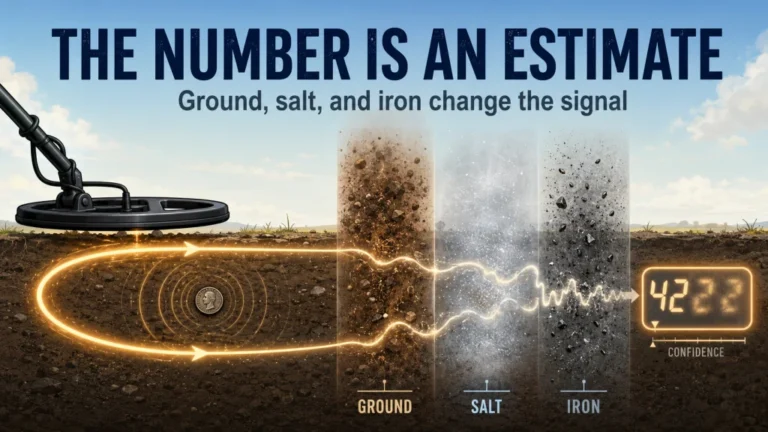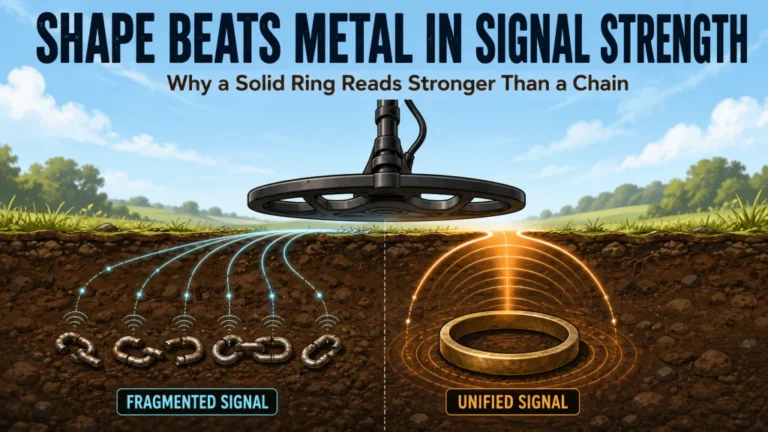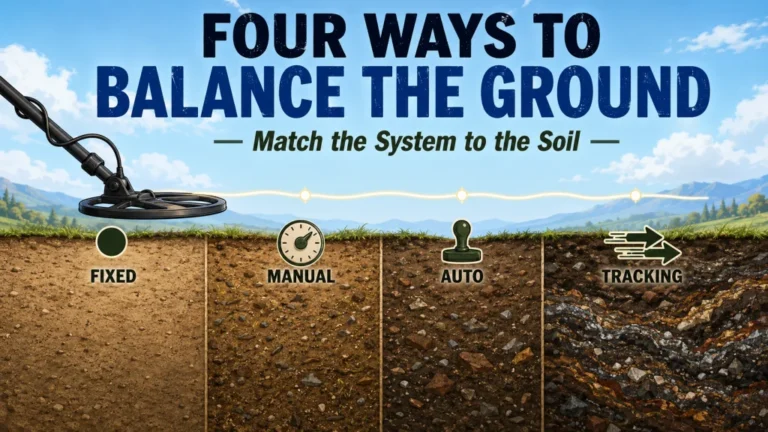
Multi-frequency is not one standardized detector technology. Some machines let you choose one operating frequency at a time, while others process more than one frequency within the same search mode, and those two designs solve different problems. The practical value depends on the ground, the target mix, the search mode, and the quality of the signal processing, not on the words printed on the control box. By the end, you will know when multi-frequency capability is useful, when a good single-frequency setup is enough, and what to verify before paying for added versatility.

Multi-Frequency Metal Detector Explained Without the Marketing Fog
The first thing I would clear up is that “multi-frequency” does not describe one uniform system. A selectable frequency metal detector may offer several operating choices but still search with only one of them at a time. A simultaneous multi frequency detector processes more than one frequency within the active search mode, but the frequencies, weighting, filters, ground subtraction, and target processing can differ from one design to another.
That distinction matters because two detectors carrying the same broad label may behave very differently in wet salt, changing soil, iron contamination, or electromagnetic interference (EMI). Before comparing labels, it helps to understand the main metal detector technology types and how metal detectors create target responses. This article stays focused on frequency systems used by hobby detectorists, not pulse induction circuitry, industrial detection, or manufacturer claims that cannot be checked against published documentation and field evidence.
Separate the Three Frequency Categories First
Most confusion disappears once the detector is placed into the correct category. Very low frequency (VLF) technology describes the broad induction-balance family used by many hobby machines, but it does not tell you whether the machine is fixed-frequency, selectable, or simultaneous. Those are operating arrangements inside the wider technology family, not interchangeable names.
The table below is the quickest way I know to keep the categories straight. The key question is not how many numbers appear in the brochure. It is how many frequencies the detector processes during the search mode you are actually using.
| Frequency category | What happens during the search | What the operator gains | Main limitation |
|---|---|---|---|
| Fixed single-frequency | The detector searches on one designed operating frequency. | Simple setup and predictable behavior in the conditions it suits. | Less flexibility when target type or ground conditions change. |
| Selectable single-frequency | The operator chooses one frequency from several available options. | The ability to favor a target range, respond to EMI, or adapt the setup before searching. | Only the selected frequency is used during that search mode. |
| Simultaneous multi-frequency | The active mode processes more than one frequency as part of the same search operation. | Potentially broader target response and better ground or salt handling, depending on implementation. | The label does not reveal the frequency mix, weighting, filters, or actual field performance. |
A detector that offers both simultaneous operation and selectable single frequencies belongs in more than one row depending on the mode being used. That is why I read the manual by mode rather than assuming the machine behaves the same way everywhere. For a deeper explanation of the base circuit family, see how VLF metal detectors process targets.
What Simultaneous Multi-Frequency Can Add
The strongest case for simultaneous operation is not a universal depth increase. It is the possibility of keeping a useful target response while the ground, moisture, conductivity, or target mix changes. A well-designed mode may use combined frequency information and filtering to reduce ground-related variation, stabilize target identification, or preserve a broader response across low and high conductors without forcing the operator to choose one frequency for the entire hunt.
Conductive ground is one place where that broader processing can matter, but the result still depends on the mode itself. Salt subtraction, ground handling, coil behavior, sensitivity control, and the way target information is weighted all affect whether the machine becomes calmer or merely different. The useful question is therefore not whether the detector is simultaneous, but whether its simultaneous mode solves the specific instability the operator is seeing.
- Changing ground: A useful multi-frequency mode may reduce the amount of retuning needed as soil moisture or mineral response changes across a site.
- Wet salt conditions: A purpose-built salt mode may suppress part of the conductive ground response that causes chatter and false signals.
- Mixed target sizes: Processing more than one frequency may help preserve response across small, medium, and larger conductors without forcing one frequency choice for the entire hunt.
- Target ID stability: Some systems provide a tighter or more repeatable identification range in difficult ground, although this must be verified in comparable conditions.
- One-machine versatility: A detectorist moving between parks, fields, freshwater sites, and beaches may spend less time changing machines or rebuilding settings.
These are potential benefits, not automatic results. Mode design, recovery speed, target separation, coil size, sensitivity, ground balance, and the amount of local EMI can change the outcome. A poorly matched mode can still be noisy, slow, or weak on the target the operator cares about.

The Garrett Ace Sniper is a compact 4.5-inch search coil for Garrett ACE Series detectors. Its concentrated detection field is designed for small targets and maneuvering through roots, rocks, and trash-filled sites. The listing also identifies it as a submersible coil suitable for shallow-water detecting.
Check On AmazonIf you click this link and buy, we earn a commission at no additional cost to you.
What Multi-Frequency Does Not Guarantee
The most common buying mistake is treating multi-frequency as a performance grade. It is a processing approach, not proof of depth, perfect identification, or superior separation. A good single-frequency machine in mild inland soil can still give a clean, fast response on the targets and depths that matter at that site.
I have hunted mineralized soil that ate a machine’s usable depth alive and sandy loam that produced much cleaner responses at far greater range. That difference is why I will not call one frequency system universally deeper. Soil mineralization, target size, target orientation, coil choice, sweep speed, filtering, and sensitivity all affect what reaches the headphones.
Simultaneous operation also does not turn target identification into a metal analyzer. Foil, pull tabs, small gold, odd-shaped brass, corroded coins, and mixed targets can overlap on the same scale. When mineralization becomes severe enough that ordinary induction-balance systems lose too much usable signal, the reader should understand how pulse induction handles difficult ground rather than expecting a multi-frequency label to erase the difference.
Who Benefits and Who May Not Need It
Multi-frequency earns its place when it removes a recurring limitation. That limitation might be a detector that becomes unstable as ground conductivity changes, target IDs that spread too widely in mixed soil, or the need to carry separate setups for several regular hunt types. The benefit is practical coverage across conditions, not ownership of the most complicated control box.
Someone who already gets repeatable audio, useful separation, and sufficient depth at a familiar site should define the missing capability before replacing anything. If no specific failure appears, the added processing may offer convenience rather than a meaningful field advantage. That is still a valid reason to upgrade, but it should be recognized as convenience rather than proof that the existing machine is inadequate.
| Detectorist situation | Likely value of multi-frequency | What to verify first |
|---|---|---|
| Regular wet salt beach hunting | Often high | A dedicated wet-salt mode, waterproof limits, stability, and usable sensitivity near the waterline. |
| Several inland sites with changing soil | Moderate to high | Ground handling, target ID repeatability, recovery behavior, and mode differences. |
| One mild, familiar park | Possibly low | Whether the current single-frequency machine already meets the actual depth and separation need. |
| Heavy iron or dense modern trash | Depends on implementation | Recovery speed, unmasking behavior, audio clarity, coil options, and filtering. |
| Severe magnetic mineralization | Conditional | Usable stability and target response against both single-frequency VLF and PI evidence. |
The decision should come from the hardest regular site, not the easiest demonstration. A detector that looks impressive in clean soil may add little if the real problem is wet salt, black sand, changing mineralization, or tight iron contamination.

The GADFISH Sand Scoop is made from 201 stainless steel and is designed for beach and underwater searching. It can be used with its long pole to sift sand while standing. The kit also includes a separate sand shovel for moving and recovering material around a detected target.
Check On AmazonIf you click this link and buy, we earn a commission at no additional cost to you.
Why Modes and Processing Matter More Than Frequency Count
Manufacturers do not all combine and process frequency information the same way. One search mode may favor a different part of the target range than another, apply stronger ground subtraction, use different recovery behavior, or alter iron filtering. The coil and software are part of the system too, so comparing only a list of frequencies leaves out much of what the detectorist will hear in the field.
This also explains why a selectable frequency can remain useful on a detector that already has simultaneous modes. A single-frequency option may run more quietly around a particular source of EMI, give a preferred audio response on a known target class, or let the operator isolate whether instability is coming from the ground or from the selected processing. It is a tool for diagnosis and specialization, not evidence that simultaneous operation failed.
Comparing multi-frequency with VLF as though they were opposite technologies creates the wrong starting point. Most hobby simultaneous systems still use VLF-style induction-balance principles, so the useful comparison is fixed single-frequency, selectable single-frequency, and simultaneous processing. Once that language is clear, the buyer can compare actual behavior instead of arguing over labels.
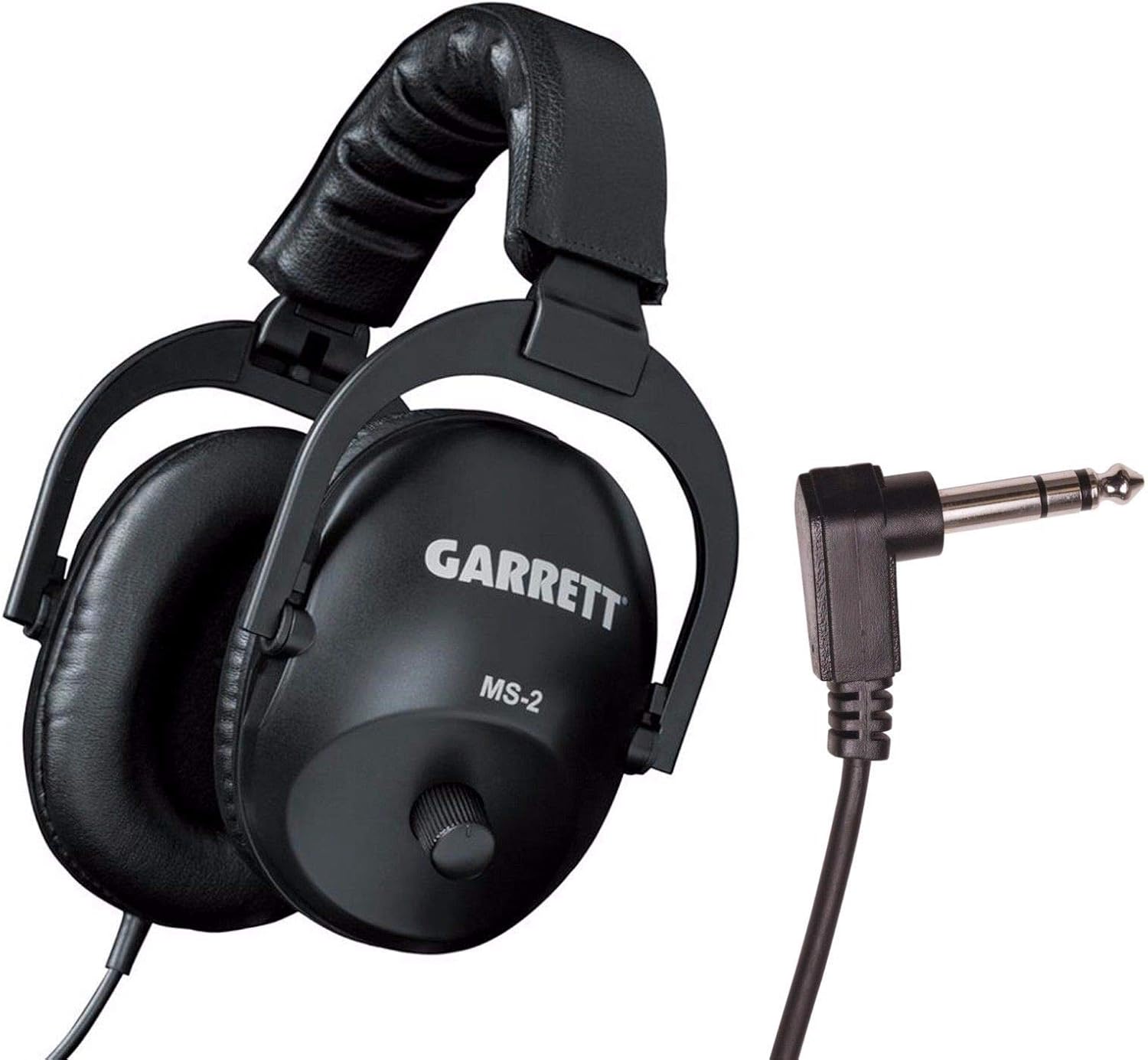
The Garrett MS-2 Headphones use a 1/4 inch right-angle stereo plug and are made for metal detecting use. They include volume control for adjusting signal levels and improving weak-signal listening. The design also uses padded ear cups, an adjustable headband, and a reinforced coiled cable.
Check On AmazonIf you click this link and buy, we earn a commission at no additional cost to you.
Use This Decision Framework Before Paying More
Start with the failure you can observe and work backward. Chatter that follows changes in conductivity calls for a different check than smeared target IDs, slow recovery around iron, or a coil that does not fit the site. Naming the failure first prevents the technology label from becoming the diagnosis.
The framework below keeps the comparison tied to field performance. I would not move to price until the detector has passed the first six checks, because a lower price does not rescue the wrong technology and a higher price does not prove the right implementation.
| Decision check | What to confirm | Warning sign |
|---|---|---|
| Exact operating type | Fixed single, selectable single, simultaneous, or a combination by mode. | The description says only “multi-frequency” without explaining operation. |
| Mode-specific behavior | Which modes use simultaneous processing and which use a single frequency. | All modes are treated as though they share the same processing. |
| Salt performance | Evidence from wet conductive sand, not dry beach sand alone. | Beach claims rely only on air tests or dry sand demonstrations. |
| Recovery and separation | Repeatable audio around iron and adjacent trash at realistic sweep speeds. | Depth claims are shown without nearby targets or ground response. |
| Target ID stability | The width and repeatability of the ID range in the relevant soil. | One clean number is shown from a shallow, isolated target. |
| Ground handling | Noise level, usable sensitivity, ground balance behavior, and false signals. | The machine is technically detecting but cannot be run calmly enough to interpret. |
| Physical fit | Weight, balance, shaft length, control access, battery life, and weather protection. | The technology is useful but the operator cannot swing it comfortably for a full hunt. |
| Coil support | Coil sizes that match open ground, trash density, brush, water, or target size. | The available coil forces a poor compromise at the main site. |
| Field evidence | Comparable targets, settings, coils, ground, and repeatable passes. | The conclusion rests on one uncontrolled air test or a promotional claim. |
| Price relative to capability | Whether the added cost buys a mode, ground response, coil option, or physical feature that solves a real need. | The price premium is justified only by the multi-frequency label or by features the operator will not use. |
That sequence prevents the label from making the decision before the site has spoken. The detectorist who knows the ground problem, target mix, and physical limits can evaluate almost any current system without needing a ranked product list.

The Minelab carry bag uses reinforced canvas with padding to protect metal detecting equipment during storage and transport. It is designed to accommodate a wide range of metal detectors. An exterior zippered pocket provides additional space for accessories such as diggers and headphones.
Check On AmazonIf you click this link and buy, we earn a commission at no additional cost to you.
A Simple Field Test for Multi-Frequency Claims
A useful comparison does not need laboratory equipment, but it does need control. Use the same targets, the same marked locations, and the same sweep path. Record the settings instead of relying on memory, because a one-step sensitivity change or a different recovery setting can make the frequency comparison meaningless.
I would test the simultaneous mode against the most relevant single-frequency option, not against a deliberately poor setup. The purpose is to learn where each mode becomes unstable, loses repeatability, or changes the target response. That information is more useful than deciding which mode gives the loudest air-test beep.
- Choose two or three representative targets, including one low conductor and one higher conductor.
- Use targets at known positions and realistic depths in the ground being evaluated.
- Run noise cancel or frequency scan before each comparison when the detector provides it.
- Ground balance each mode according to the manual rather than copying one value across modes.
- Raise sensitivity only until the setup remains stable enough to interpret.
- Sweep from two directions at a repeatable speed and note audio, target ID range, and false signals.
- Repeat the test in the difficult part of the site, such as wet salt, mineralized soil, or nearby EMI.
This is not a universal depth test, and it should not be published as one. It is a site-fit test that shows which mode gives the operator the most usable information under the conditions that actually matter.
Final Thoughts: Buy the Ground Solution, Not the Label
A multi-frequency detector can be a strong choice when wet salt, changing soil, mixed target sizes, or the need for one versatile setup creates a real problem. It is much less convincing when the buyer is replacing a stable, well-understood single-frequency machine at one mild inland site only because the newer label sounds more advanced.
I would make the choice in this order: define the difficult ground, identify the target mix, verify how each search mode operates, compare usable stability and target response, then consider controls, weight, coils, and price. Multi-frequency earns its cost when the implementation keeps more of the hunt understandable. The next step is to compare the published modes, coil support, physical fit, and field evidence of the machines currently under consideration, using the same checklist rather than assuming the shared label means shared performance.
FAQs
📡 Is selectable frequency the same as simultaneous multi-frequency?
No. Selectable frequency means you choose one operating frequency for that search mode. Simultaneous multi-frequency processes more than one frequency within the same active mode.
🏖️ Do I need multi-frequency for wet salt beach detecting?
A simultaneous system with a purpose-built salt mode is often the more stable VLF-style choice for wet conductive sand. Verify the exact salt mode, waterproof limits, and field evidence because the general label alone does not guarantee good beach performance.
📏 Is a multi-frequency detector always deeper?
No. Usable depth depends on soil, target size and orientation, coil, sensitivity, filtering, recovery speed, and the specific processing. Multi-frequency may improve stability or identification in some conditions without producing a universal depth gain.
🪙 Does multi-frequency identify targets perfectly?
No detector identifies buried metal perfectly. Target shape, corrosion, depth, nearby iron, mineralization, and overlapping conductivity can move or widen the displayed ID.
🌳 Is single-frequency still enough for park hunting?
It can be. At a stable inland site, a suitable single-frequency detector may already provide the depth, separation, and audio repeatability needed. Upgrade only when a specific ground or versatility problem remains unsolved.
⚙️ Why would I use single frequency on a detector that has simultaneous modes?
A single-frequency option can help diagnose EMI, specialize the response, or compare whether instability comes from the ground or the active processing. Its usefulness depends on the machine, site, and target goal.
Sources and References
- Minelab Multi-IQ technology overview: official description of simultaneous multi-frequency processing and its intended ground and target applications.
- XP multi-frequency technical FAQ: official explanation of mode-dependent frequency combinations, wet conductive ground behavior, and target display stability.
- Garrett Multi-Flex technology description: official example of a platform offering selectable single frequencies and simultaneous multi-frequency modes.
- DetectorProspector high-mineralization comparison: attributable field testing comparing simultaneous and selectable single-frequency target IDs in mineralized ground.