Metal detector coil height and swing speed work best when they are controlled and repeatable, not when they follow one universal height or pace. Set the detector to your body first, keep the coil close and approximately parallel to the local surface, then use the sweep speed recommended for your machine or search program as a starting point. Test several controlled speeds over known targets because target density, ground conditions, coil size, recovery behavior, and target strength can all change the best pace. By the end, you should be able to recognize end-of-sweep lift, correct an unstable arc, and adjust your technique without guessing.
Controlled and Repeatable Beats Low, Wide, Slow, or Fast
The first mistake is trying to solve swing technique with a slogan. “Keep it low,” “swing wider,” and “slow down” can each be useful in the right situation, but none of them is a complete instruction. A coil that starts close to the ground and rises at both ends is not controlled. A slow sweep that is too slow for the selected program can be just as unhelpful as a rushed sweep that clips weak responses.
I judge a proper metal detector swing by whether I can repeat the same height, angle, path, and pace without fighting the shaft. That is the foundation for building a repeatable swing technique, because a machine cannot respond consistently when the coil movement changes on every pass. The goal is not a rigid robotic motion. The goal is a movement stable enough that a change in audio is more likely to come from the ground or a target than from your arm.
Key point: Do not search for one perfect number. Build a repeatable baseline, then adjust one part of the motion when the terrain, target density, or detector program gives you a reason.
This article stays with detector fit, coil position, sweep path, and sweep speed. It does not teach lane spacing or site gridding, which belongs with maintaining a consistent coverage pattern. It also stops before target localization, so once a signal is found, use a separate method for pinpointing a target after detection.
Set the Detector to Your Body Before Correcting the Swing
A poor fit forces compensation. When the shaft is too long, the coil sits too far in front of you and your shoulder has to pull it through the arc. When the shaft is too short, you stoop or bend the wrist to reach the ground. Both problems make the outside of the sweep harder to control, and both can look like a technique problem when the real issue is setup.
Stand in your normal detecting posture and place the coil on level ground slightly ahead of your feet. Adjust the shaft until your elbow can remain relaxed, your wrist stays close to neutral, and the coil can move from side to side without your shoulder reaching forward. The arm cuff should support the forearm rather than sit so far back that the detector pivots loosely. Tighten the strap enough to keep the cuff connected to your arm, but not so tightly that it restricts a natural motion.
- Set the shaft length while wearing the same footwear you use in the field.
- Position the arm cuff so the handle feels like an extension of the forearm.
- Use the strap to stabilize the detector instead of squeezing the grip harder.
- Set the coil angle while standing naturally, not while bending over to force it flat.
- Check that the coil cable and connector do not pull the coil out of position.
After those adjustments, make several easy sweeps over clean ground. If the coil still tips forward, drags at one edge, or rises whenever your arm changes direction, correct the coil joint and your grip before changing speed. The right fit reduces fatigue, but more importantly, it removes extra movement that can hide the real cause of a broken or inconsistent response.
How Close Should a Metal Detector Coil Be to the Ground?
Keep the coil consistently close to the surface while respecting the terrain and the operating guidance for your detector. That does not mean grinding the coil through soil, rocks, roots, or wet sand. Striking the ground can create false responses, disturb the coil angle, and turn a smooth pass into a series of jolts. The useful height is the lowest height you can maintain through the entire sweep without repeated impacts or abrupt changes.
There is no universal one-inch rule that fits every detector, coil, and surface. A clipped lawn may allow a very close pass, while corn stubble or exposed roots may require the whole sweep to be raised. The mistake is lifting only at the obstacle and dropping immediately afterward, which creates a bobbing path. Instead, choose a stable working height for that short section of terrain, then lower the entire arc again when the surface becomes clear.
Warning: Do not confuse “closer” with “better” when the detector becomes unstable near mineralized ground or when the coil repeatedly strikes the surface. Follow the manual for the exact machine and search program before treating any height as mandatory.
A simple check is to watch the gap under the front and rear edges of the coil, not only the center. If one edge repeatedly approaches the ground while the other rises, the coil is tilted even if the middle appears close. Correcting that angle usually improves consistency more than forcing the entire detector lower.
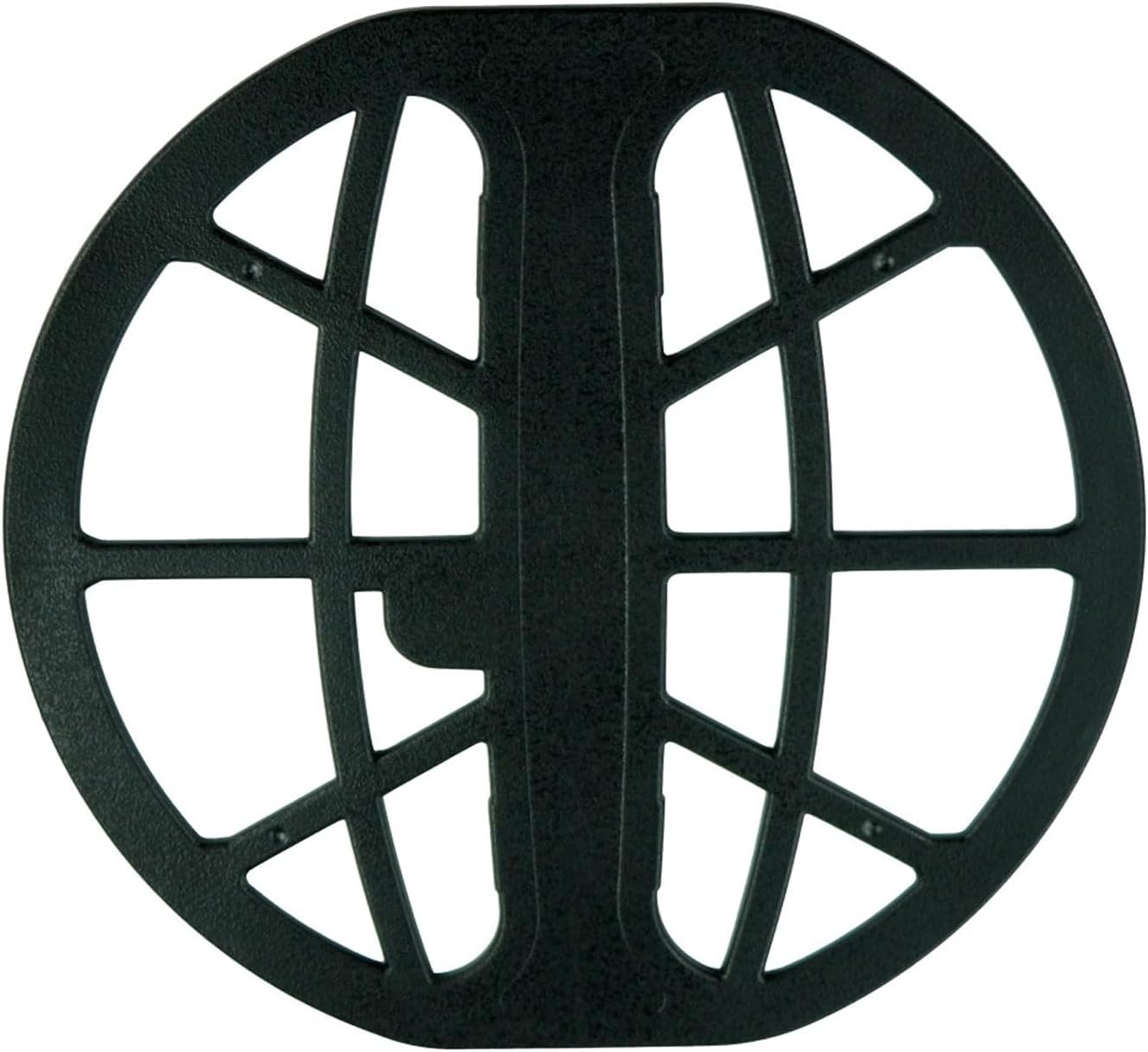
This MINELAB skidplate is made specifically for the M11 DD MANTICORE search coil. It helps protect the coil from bumps, dust, and general wear during detecting. The cover installs directly onto the M11 coil and uses a durable plastic construction.
Check On AmazonIf you click this link and buy, we earn a commission at no additional cost to you.
Keep the Coil Parallel to the Local Surface
“Level” does not always mean level with the horizon. On a slope, the useful reference is the ground directly under the coil. If the coil stays horizontal while the terrain rises, one side moves farther from the soil and the other side may strike it. The coil should remain approximately parallel to the local surface as the terrain changes.
This is easiest on flat park grass and hardest where the surface changes inside one sweep. A shallow ditch, plow ridge, beach cut, or tree root can make a long arc cross several different angles at once. In that situation, shorten the sweep and work each surface as its own small section. Trying to preserve one wide arc across all of it usually causes height changes that are larger than the terrain itself.
The practical test is whether the coil face would appear to slide along an invisible sheet laid over the ground. It does not need to be perfectly flat every second, especially on rough terrain, but large repeated tilts reduce the consistency of the search field. A shorter controlled pass is more useful than a wide pass that spends much of its travel angled away from the surface.
Correct End-of-Sweep Lift by Shortening the Arc
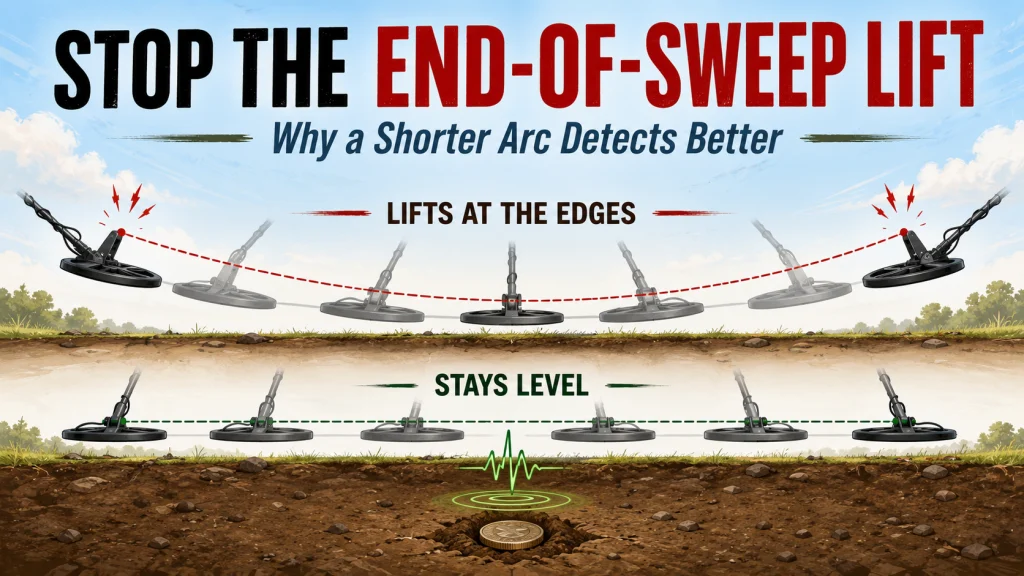
End-of-sweep lift usually begins when the coil travels farther than the arm can comfortably control. The hand reaches the outside of its natural range, the wrist rotates, and the coil rises before reversing direction. From above, the swing may look wide and efficient. From the side, the coil follows a shallow smile, low in the center and high at both ends.
The correction is not to press down harder. Shorten the arc until the coil can reverse direction while staying close to the same height. Keep the turn smooth instead of snapping the wrist at the edge. If the outside of the sweep still rises, move your feet sooner or narrow the arc again.
Field Note: When I check my own swing, I pay attention to whether a sound appears at the same outside point on repeated passes. If it does, I shorten the arc and repeat the sweep at the same ground height before treating that sound as a target. A response caused by coil movement often changes or disappears when the path becomes stable.
A controlled arc also reduces the temptation to throw the coil forward with the shoulder. Think of the motion as a measured side-to-side pass in front of the feet, not a pendulum swinging around the body. The moment you need momentum to reach the edge, the sweep is probably wider than your posture can support.
How Fast to Swing a Metal Detector Without Guessing
Begin with the sweep guidance in the manual for your detector and the search program you are using. Motion-based detectors and their processing are not all tuned for the same pace, so a speed copied from another operator may be wrong even when that person is using good technique. The manual gives you a defensible starting point. The field test tells you how that starting point behaves with your settings and ground.
Use several suitable known targets rather than one object. Place a coin-sized nonferrous target, a small piece of foil, and an iron item on clean ground with enough separation that their responses do not overlap. Sweep the same centered path at a slow, moderate, and faster controlled pace without changing coil height. Listen for a complete, repeatable response, not merely the loudest sound.
| Test variable | Keep constant | What to listen for |
|---|---|---|
| Sweep speed | Height, angle, path, target position | Whether the response stays complete and repeatable |
| Coil height | Speed, path, program, target | Where a weak response becomes inconsistent |
| Search program | Target, path, height, controlled pace | How response shape changes with processing |
| Target spacing | Program, height, angle, speed | Whether adjacent responses remain distinguishable |
This test does not create a permanent speed for every hunt. It gives you a baseline for that detector, coil, program, and target set. Repeat it after a major program change or coil change, and repeat a shorter version when the site behaves differently from the ground where you practiced.
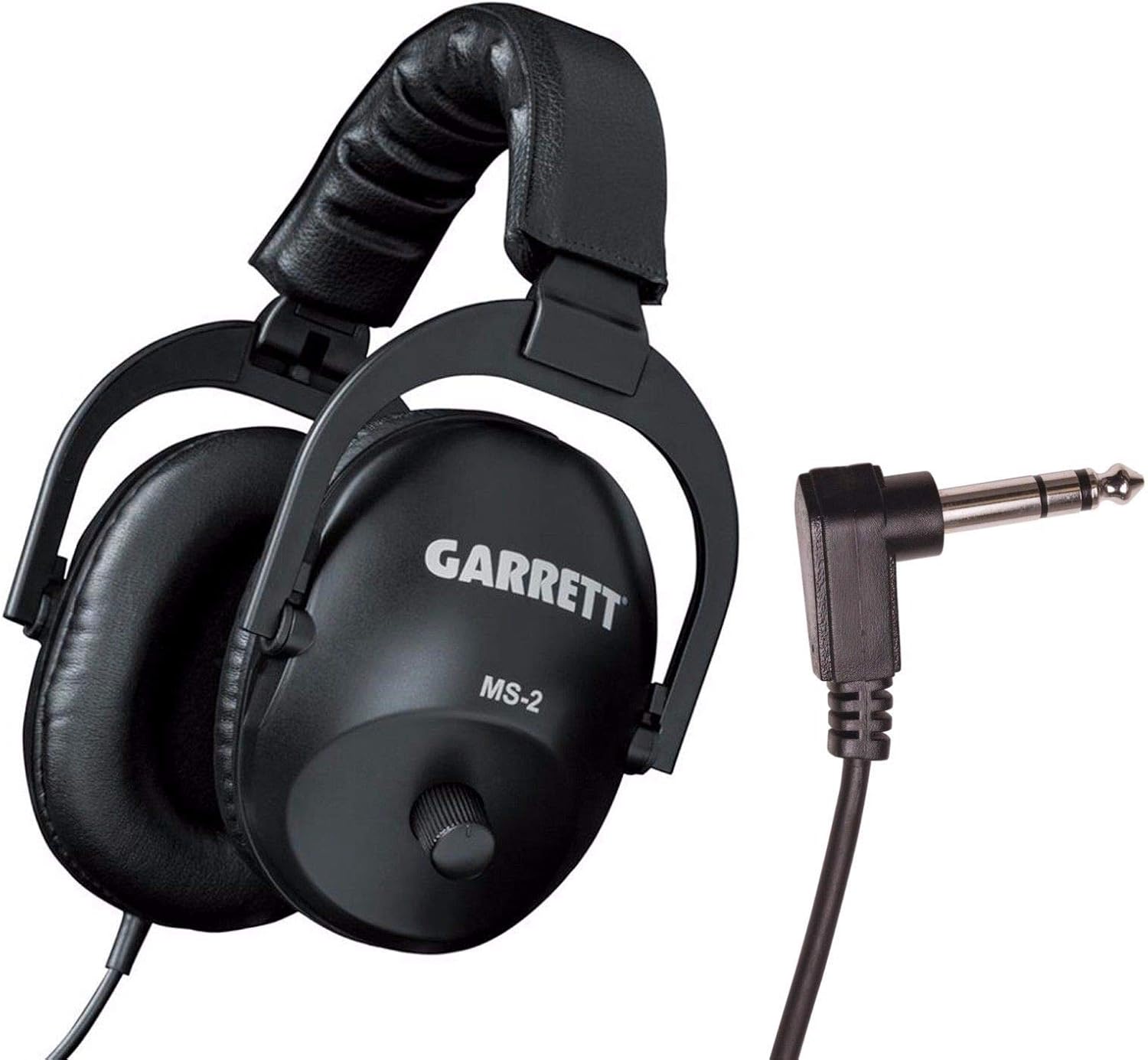
The Garrett MS-2 Headphones use a 1/4 inch right-angle stereo plug and are made for metal detecting use. They include volume control for adjusting signal levels and improving weak-signal listening. The design also uses padded ear cups, an adjustable headband, and a reinforced coiled cable.
Check On AmazonIf you click this link and buy, we earn a commission at no additional cost to you.
Match Sweep Speed to Target Density, Ground, and Response Strength
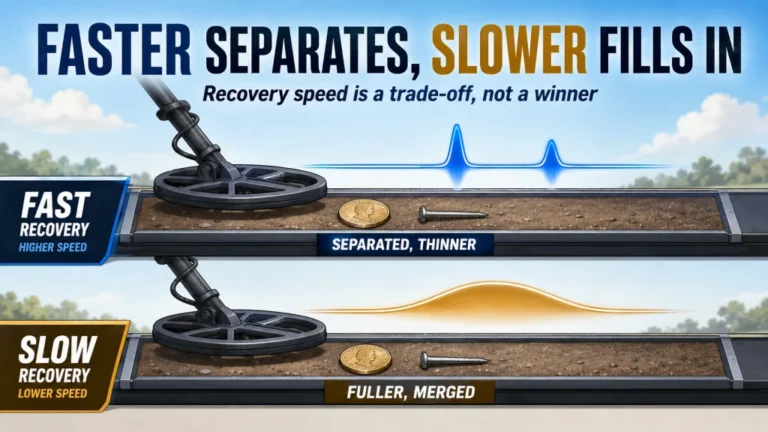
Dense iron or modern trash usually demands more control, but “slow down” needs to be separated into two decisions. You may need to reduce your walking pace so you are not advancing before the detector finishes reporting several nearby targets. You may also need a shorter, more deliberate sweep that lets you hear how one response changes as the coil passes adjacent metal. Those adjustments are related, but they are not the same thing.
Do not assume the slowest possible coil movement is automatically best. Some programs need enough motion to produce a clean response, and an extremely slow pass can smear or weaken the information you are trying to hear. Start with the manual’s guidance, then make small changes while keeping the coil path stable. In dense targets, the correct pace is the one that produces repeatable information you can separate, not the pace that looks slowest.
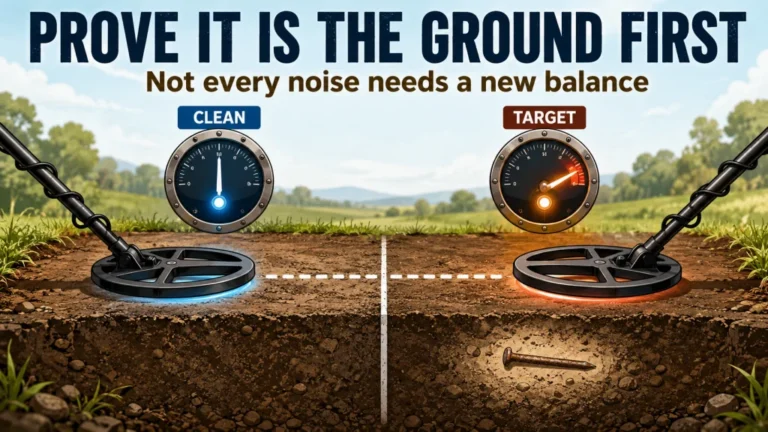
Cleaner ground allows a longer controlled arc and a steadier forward pace because the machine has fewer adjacent responses to process. That does not justify racing through weak signals. When a faint or clipped response appears, reduce the arc around that spot and test it at more than one controlled speed. A weak target may become clearer when the speed matches the program, while ground noise or an impact response often fails to repeat the same way.
Coil size also changes how easy the motion is to control. A larger or heavier coil can carry more momentum, making overshoot and end lift more likely, while a smaller coil can be easier to maneuver between close obstacles and dense targets. The answer is not to assign one speed to each coil size. Recheck balance, shorten the arc if needed, and confirm the response over known targets before deciding that the new coil should be swung faster or slower.
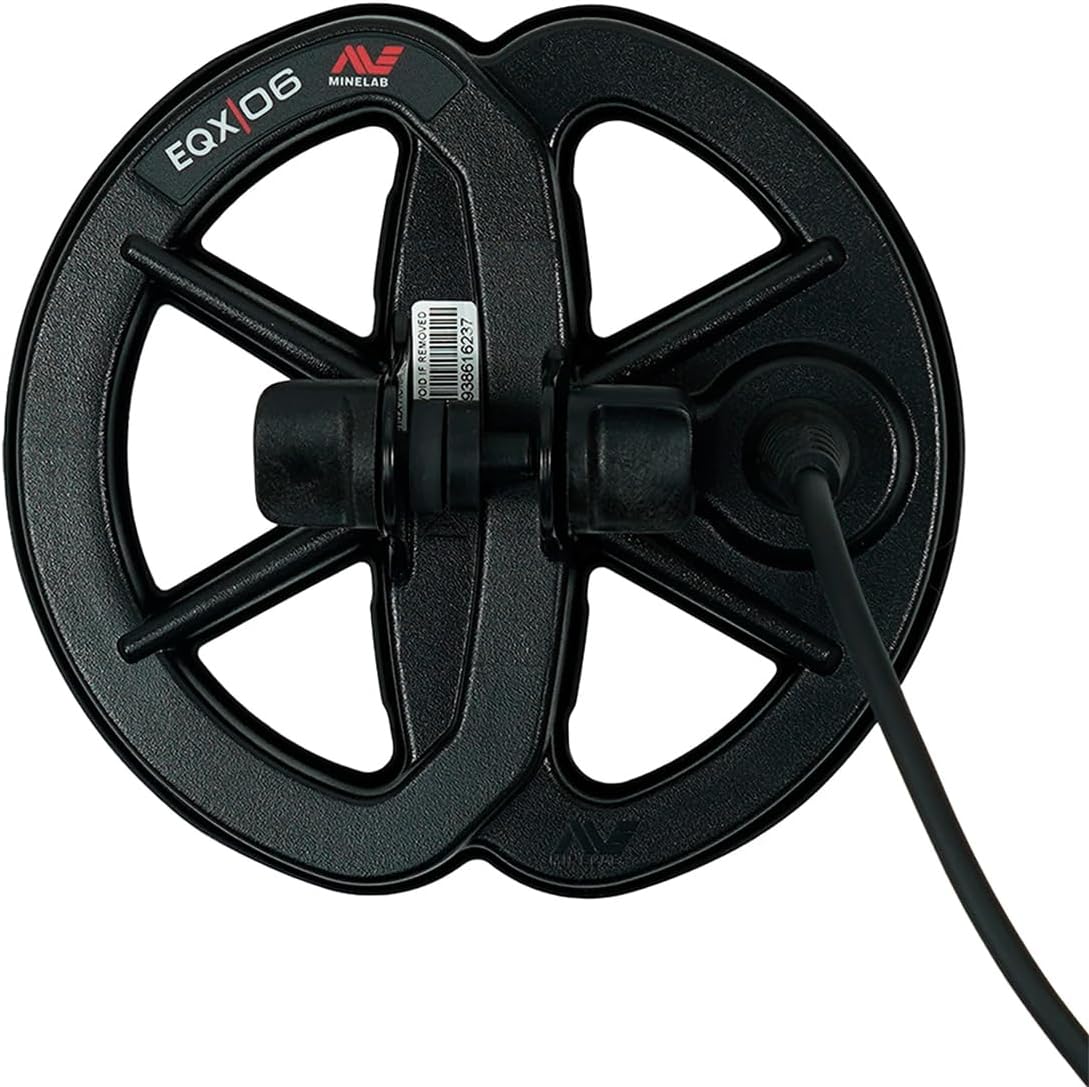
The MINELAB EQX 06 is a 6-inch round Double-D Smart Coil for Equinox Series and X-Terra PRO metal detectors. MINELAB describes it as sensitive to small targets and suited to high-trash areas and difficult terrain. It weighs 10.68 ounces and includes a protective skidplate.
Check On AmazonIf you click this link and buy, we earn a commission at no additional cost to you.
Adjust for Terrain Before Fatigue Breaks the Technique
Terrain changes the path first, then fatigue magnifies every error. On clipped grass, the coil can follow a smooth low pass. In woods, stubble, rocky soil, or uneven beach sand, the same arc may strike obstacles or climb over them. Shorten the sweep, follow the local surface, and reposition your feet instead of reaching around every obstruction.
When one section is too rough for a close pass, raise the whole sweep enough to clear it consistently. Do not alternate between dragging the coil and lifting it several inches on every obstacle. That repeated vertical movement makes weak signals harder to compare because the distance to the ground changes faster than the target response. Once the surface improves, lower the entire controlled arc again.
Fatigue shows up as a tightening grip, a bent wrist, shoulder-led swings, and a coil that rises more with each pass. Pause before the movement falls apart. Reset the shaft or cuff if they have slipped, loosen the grip, and reduce the arc for the next section. A support strap or harness can help when the detector or coil is physically tiring, but it does not correct a poor shaft length or an oversized sweep by itself.
Pro Tips: Check the outside edge of the sweep after ten minutes, not only when you begin. A setup that feels controlled while fresh can become too long or too wide after fatigue changes your posture.
The useful habit is to treat fatigue as a technique variable rather than a test of toughness. A shorter stable pass late in the hunt is more productive than a wide pass that lifts, tilts, and strikes the ground. Good practical metal detecting tips should reduce wasted motion, not ask you to preserve a perfect-looking swing after your control is already gone.

The Minelab carry bag uses reinforced canvas with padding to protect metal detecting equipment during storage and transport. It is designed to accommodate a wide range of metal detectors. An exterior zippered pocket provides additional space for accessories such as diggers and headphones.
Check On AmazonIf you click this link and buy, we earn a commission at no additional cost to you.
A Five-Pass Field Check for Coil Control
When I need to separate a technique problem from a detector problem, I use a short controlled check instead of changing several settings at once. The purpose is to make the coil movement predictable enough that the audio can be judged fairly. This can be done before a hunt or whenever the machine begins producing responses that seem tied to the swing itself.
- Choose a clean patch and confirm the detector is stable while the coil is held at the intended working height.
- Place one suitable known target where the center of the coil can cross it on every pass.
- Make one moderate pass while watching the coil height at both ends of the arc.
- Repeat at a slightly slower pace, then a slightly faster pace, without changing the path or height.
- Use the pace that gives the most complete repeatable response, then carry that controlled motion into the surrounding ground.
If the response changes because the coil height, angle, and path changed at the same time, the test tells you nothing. Repeat the pass and alter only one variable. That discipline matters more than finding a dramatic difference, because the goal is to identify the cause rather than prove that one speed is universally superior.
This check also reveals fit problems quickly. If the coil cannot cross the same target three times without changing height at the edges, return to shaft length, cuff position, grip, or arc width. Settings should not be used to compensate for a mechanical motion that is still inconsistent.
Final Thoughts: Make the Coil Predictable Before Chasing More Depth
The best starting technique is a coil held consistently close and approximately parallel to the local surface, moving through an arc you can control without reaching or snapping the wrist. Set the detector to your body, use the manual’s sweep guidance, and test known targets at several controlled speeds. That process gives you a working baseline without pretending one inch or one sweep time fits every machine and every site.
I would correct height, angle, and end lift before changing settings to chase a weak response. Once the movement is repeatable, speed adjustments become meaningful because you are comparing the detector’s response rather than comparing two different swings. Controlled technique does not guarantee a find, but it prevents your own motion from becoming the easiest target to miss.
FAQs
📏 How close should the metal detector coil be to the ground?
Keep it as close as you can hold consistently without repeated impacts, scraping, or instability. The correct height depends on the detector, coil, terrain, and manufacturer guidance, so do not treat one measurement as universal.
⏱️ How fast should I swing a metal detector?
Start with the manual or search-program guidance for your machine. Then test known targets at several controlled speeds while keeping coil height and path unchanged, and use the pace that gives the clearest repeatable response.
🐢 Can I swing a metal detector too slowly?
Yes, some motion-based programs need enough coil movement to produce their best response. Slower is useful only when the detector still reports targets clearly and the reduced pace helps you separate or confirm them.
🎧 Why do I hear false signals at the end of my swing?
The coil may be lifting, tilting, striking the ground, or reversing direction too sharply. Shorten the arc, smooth the turn, and repeat the pass at a consistent height before deciding the sound comes from a buried target.
🌱 Should the coil touch grass while I detect?
Light contact with soft grass may happen, but the coil should not depend on the ground to support or steer it. Avoid repeated impacts and heavy brushing, especially where hidden rocks, roots, or uneven soil can jolt the coil.
🧭 How do I keep the coil level on a slope?
Use the local surface as your reference rather than the horizon. Shorten the sweep, move your feet more often, and work the slope in smaller sections so the coil can remain approximately parallel to the ground beneath it.
💪 How can I tell if the shaft is too long?
The shaft is probably too long if you must reach forward, lead the swing with your shoulder, or lift the coil at both ends. Shorten it until your elbow and wrist remain relaxed while the coil passes naturally in front of your feet.
Sources and References
- Minelab Safari Instruction Manual: official guidance on detector fit, shaft adjustment, coil angle, keeping the coil close and parallel, and practicing over known targets.
- Garrett ACE Apex User Manual: official operating guidance on maintaining a parallel search coil and avoiding lift at the end of the sweep.
- Nokta Score User Manual: official instructions supporting consistent coil position and parallel movement over the ground.
- Minelab Coil Control Field Advice: field-oriented discussion of steady coil control, speed changes in dense targets, and matching technique to site conditions.