The best metal detectors for saltwater beach hunting are the ones that remain usable in the exact zone you plan to search, not merely the ones labeled waterproof or beach-ready. Dry sand, the wet line, black sand, breaking surf, and submerged saltwater create different demands, so a machine that behaves well in a park or on dry sand may become unstable as soon as the coil reaches conductive wet salt. For most mixed-beach hunters, the strongest starting point is a fully waterproof detector with a proven salt-specific multi-frequency implementation, while pulse induction makes more sense when severe mineralization and stable all-metal performance matter more than detailed target information. This guide shows how to separate those choices, screen each price class, and test a candidate before trusting it at the ocean.
A Park-Stable Detector Can Fail at the Wet Line
A saltwater beach is not one detecting environment. The moment dry sand becomes saturated with saltwater, the ground itself becomes electrically conductive enough to produce a response that a detector must identify and suppress. A machine that sounds calm over grass may chatter, produce shifting target IDs, or signal at the end of every sweep when the same coil crosses wet ocean sand.
The correct buying question is therefore not, “Is this a beach detector?” It is, “Which part of the beach can this complete system handle with useful sensitivity and repeatable target responses?” That distinction is central to choosing a detector for mixed beach use, because dry-sand capability says very little about performance in the wash or surf.
Key point: Waterproofing protects the equipment from water. Wet-salt capability describes whether the electronics can remain stable over conductive salt. A detector may have one without the other.
This guide is limited to wet ocean sand, the wash, surf, and shallow saltwater. Freshwater does not create the same conductive salt response, so readers hunting lakes and rivers should use the separate criteria for choosing a detector for freshwater beaches. Deep diving also introduces pressure, audio, shaft, and recovery requirements that belong in a dedicated submerged-use decision.
Separate the Beach Zones Before Comparing Detectors
I start by drawing a line around the hardest zone the buyer genuinely expects to hunt. Buying for the most demanding realistic zone prevents the common mistake of choosing a machine for dry sand and later discovering that it becomes noisy where the jewelry line is actually wet. It also prevents the opposite mistake, paying for a specialist underwater system when the detector will never leave the towel line.
| Beach zone | What changes | Minimum buying concern |
|---|---|---|
| Dry upper sand | Low salt conductivity and usually easier ground | Basic target response, comfort, and useful coil control |
| Damp transition sand | Salt response begins to increase unevenly | A real salt-capable mode and stable sweep behavior |
| Wet line | Conductive salt becomes continuous beneath the coil | Repeatable targets without excessive sensitivity loss |
| Black sand patches | Magnetic mineralization may combine with conductive salt | Ground handling that avoids overload or constant falsing |
| Wash and breaking surf | Water depth and salt load change during every sweep | Full waterproofing, stable salt handling, and dependable audio |
| Submerged shallow water | The detector, connections, and audio system remain underwater | Verified submersion rating and a workable underwater audio path |
The table is a screening tool, not a promise that every beach behaves the same. Some pale-looking sand carries difficult salt, while a dark patch may combine magnetic minerals with changing water content. Judge the detector by what it does in the target zone, not by the color of the sand or a broad “all terrain” label.
A waterproof coil alone is sufficient only when the control housing, connectors, and audio equipment will remain safely above water. Before buying for the surf, confirm what the waterproof rating actually covers, including depth limits, headphone connections, charging-port seals, and any conditions attached to the rating.
Which Detector Technologies Handle Conductive Salt?
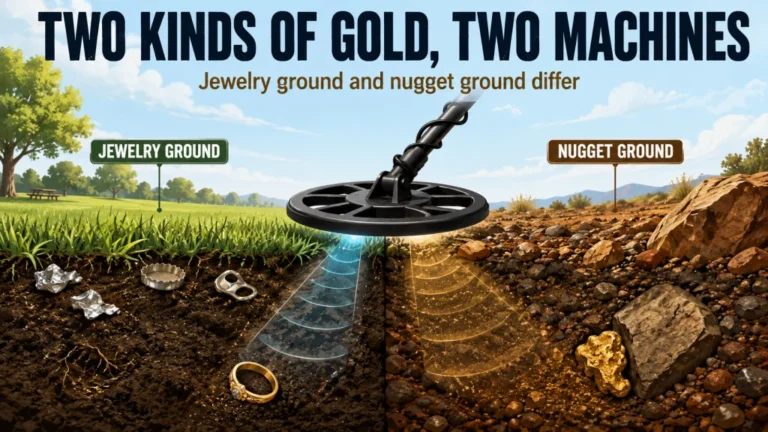
Simultaneous multi-frequency systems are the most practical general-purpose choice for many buyers because they can process more than one frequency response while using salt-specific algorithms or beach modes. The useful part is not the marketing phrase by itself. The detector must have a proven implementation that stays stable in wet salt while retaining enough response to small and low-conductive targets.
That is why two machines described as multi-frequency may behave differently at the same shoreline. Frequency weighting, ground processing, recovery behavior, transmit power, and the design of the beach program all affect the result. The deeper technical background in how simultaneous multi-frequency detection works helps explain why the implementation matters more than the label.
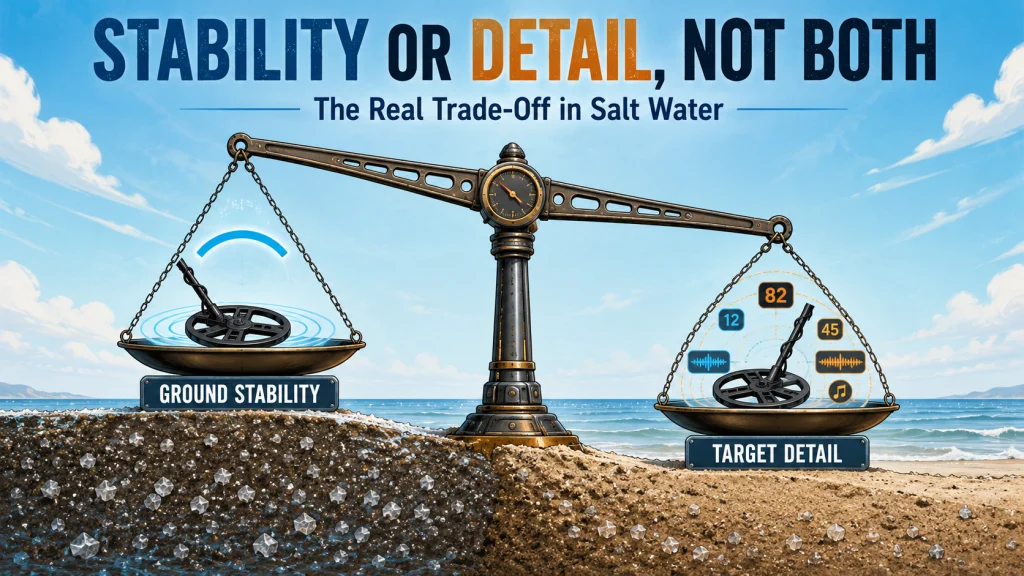
Pulse induction takes a different route. A salt-capable PI detector can remain exceptionally stable in severe wet salt and magnetic mineralization, but that strength usually comes with less dependable discrimination and less detailed target information than a modern target-ID platform. On a clean erosion cut, that trade can be acceptable. On a trash-heavy public beach, it may mean digging far more iron and aluminum.
PI is therefore not the automatic premium answer, and simultaneous multi-frequency is not the only technology that can work. A buyer should understand where pulse induction earns its advantage before accepting the recovery workload. Specialized salt-capable VLF or broad-band implementations can also work when their manuals and controlled tests show real wet-salt performance, but a generic single-frequency beach icon is not enough evidence by itself.

The Nokta The Legend uses simultaneous multi-frequency technology for operation across different targets and ground conditions. Its IP68 housing is fully submersible to 10 feet. The detector uses a rechargeable battery that can be charged through USB or a power bank.
Check On AmazonIf you click this link and buy, we earn a commission at no additional cost to you.
Use These Criteria to Screen Any Saltwater Candidate
Technology narrows the field, but the complete system decides whether the detector fits the hunt. I would rather see a buyer choose a modest machine that passes the correct zone test than pay for a feature-rich detector whose housing, audio, or balance does not fit the way it will be used. The following checklist keeps the decision tied to the beach instead of the brochure.
- Wet-salt stability: It should cross damp and saturated sand without constant ground responses or random target IDs.
- Useful sensitivity: Stability should not require reducing sensitivity until known targets become weak or inconsistent.
- Full waterproofing: The control unit, coil, cable connections, and headphone connection must match the planned depth.
- Underwater audio: Confirm whether submerged hunting requires wired waterproof headphones, bone-conduction audio, vibration, or another dedicated path.
- Ground handling: The detector should cope with both conductive salt and any magnetic black sand present at the site.
- Target information: Decide how much target ID, tone detail, and iron handling you need before digging.
- Recovery behavior: Faster separation can help in dense beach trash, while a calmer response may be preferable in cleaner open sand.
- Coil choices: Smaller coils improve control around rocks and crowded targets; larger coils cover open sand but add drag and fatigue.
- Corrosion management: Look for serviceable hardware, sensible seals, and manufacturer instructions for rinsing after salt exposure.
- Ergonomics and support: Balance, shaft stiffness, parts access, warranty terms, and service matter more after repeated surf use.
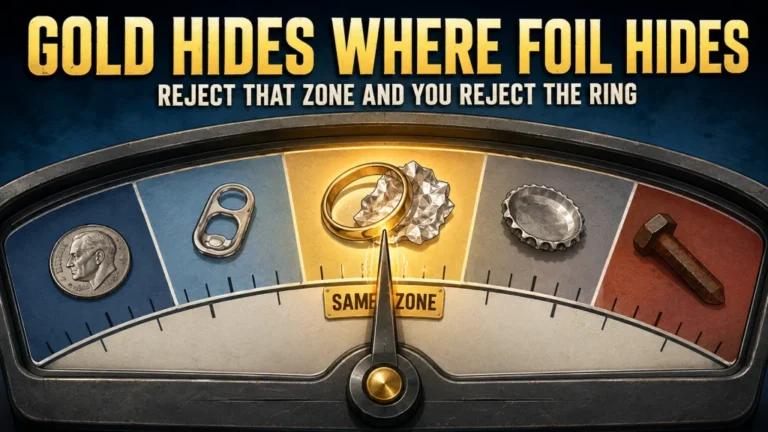
After the checklist, compare the detector with the targets that matter. A buyer mainly looking for recent rings and chains may value stable low-conductor response and informative audio more than maximum all-metal depth. The separate guide to choosing for lost gold jewelry explains why aggressive rejection can erase the same conductivity range that contains the desired target.
Warning: Do not assume ordinary wireless headphones will provide audio after the control unit or transmitter is submerged. Water can interrupt radio communication, and many included wireless headphones are not waterproof. Verify the complete underwater audio configuration before the first wading hunt.
Value Candidate Class: Buy for Wet Sand, Not Just Dry Sand
A value candidate earns consideration only when there is direct evidence that its beach mode or salt implementation works on wet ocean sand. In budget terms, this is the lowest investment level that still proves stable operation in the buyer’s intended saltwater zone. A waterproof coil and a low purchase price do not meet that standard. The minimum useful package is stable wet-salt operation, repeatable responses on suitable test targets, and enough weather or water protection for the buyer’s actual zone.
The compromise in this class is usually found in one or more secondary areas: fewer adjustment options, less detailed target information, limited coil choice, a control housing that cannot be submerged, or an audio setup designed mainly for land. Those limitations are acceptable when they are disclosed and match the intended use. A dry-sand hunter who occasionally touches damp sand needs less system capability than someone stepping into the wash every weekend.
Decision rule: A lower-cost detector that passes the wet-line test is a real value candidate. A cheaper detector that must stay above the damp transition is a dry-sand purchase, even when the package uses beach imagery.
Buyers still comparing the hobby across parks, fields, freshwater, and beaches should first compare detectors by hunt type. Saltwater performance is a specialized requirement, and paying for it makes sense only when conductive ocean ground is part of the real plan.

The Nokta Double Score uses simultaneous multi-frequency technology and includes a 12 by 9 inch SC30 search coil. Its IP68 housing is fully submersible to 16 feet. Amazon also lists a 2.6 pound detector weight and describes the model for detecting beneath wet sand and in salt water.
Check On AmazonIf you click this link and buy, we earn a commission at no additional cost to you.
Step-Up Candidate Class: Better Control Across Changing Zones
The step-up class should do more than add menu items. This is the middle investment level for buyers paying beyond basic wet-salt capability to gain fuller waterproofing, more usable information, and better control across changing beach zones. It should make the transition from dry sand to wet line and shallow wash easier to manage, with a fully waterproof system, more than one useful beach profile, adjustable recovery behavior, and better audio or target information. The buyer is paying for control that remains usable when salt load, black sand, and trash density change during the same hunt.
This is often the best fit for someone who wants one detector for inland sites and regular ocean use. The main trade is learning time. More controls can improve performance, but changing several settings at once makes it difficult to know whether the detector, the ground, or the adjustment caused the result.
A practical step-up detector should also support at least one coil size suited to open beach coverage and another that improves control in dense targets or around rocks. Coil options are not a substitute for stable electronics, but they let the same salt-capable platform handle different physical conditions without forcing the operator to swing an awkward coil everywhere.
For shallow water, confirm that the shaft, seals, and headphone connection are designed for repeated immersion rather than occasional splashes. Buyers planning to keep the detector submerged for most of the hunt should compare it with detectors built for submerged hunting, where pressure limits and underwater handling receive more weight.
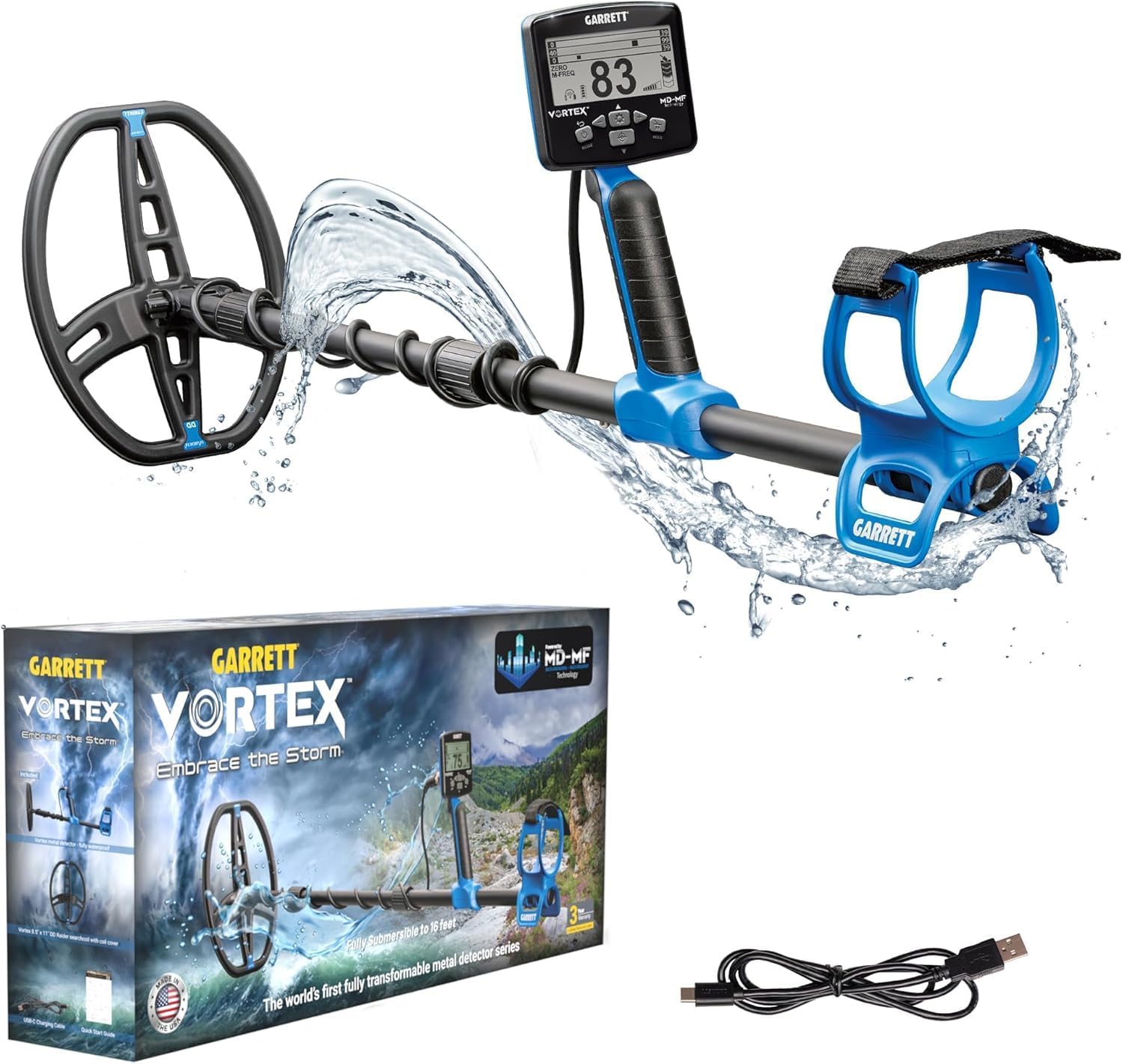
The Garrett Vortex VX9 provides seven frequency choices, including Multi-Dimensional Multi-Frequency operation. Its Multi-Frequency Salt setting is designed for the effects of saltwater beaches, while the three-tier Target ID display includes two ferrous scales. The detector is fully submersible to 16 feet.
Check On AmazonIf you click this link and buy, we earn a commission at no additional cost to you.

The Minelab MANTICORE combines Multi-IQ+ simultaneous multi-frequency technology with a 2D Target ID map and multiple audio options. Its ten search modes include Beach settings for sand, surf, and seawater zones. The IP68 detector is waterproof to 16 feet and folds down for more compact transport.
Check On AmazonIf you click this link and buy, we earn a commission at no additional cost to you.
Specialist PI Class: Stability With a Different Trade-Off
A specialist PI detector belongs on the list when the beach contains severe conductive salt, concentrated black sand, or submerged conditions that defeat or overload ordinary target-ID systems. This is specialist spending rather than an automatic step above the premium class, because the money is directed toward difficult-ground performance instead of richer target information. Its value is a stable all-metal response in difficult ground. That can expose targets that are hard to hear with a poorly matched VLF setup.
The cost of that stability is usually digging efficiency. Limited iron identification and weak discrimination mean that a PI user may recover many more nails, wire pieces, hooks, and aluminum fragments. On a clean, eroded section of shoreline, that may be a reasonable exchange. Around a busy pier or heavily littered towel line, it can turn the hunt into a recovery marathon.
The decision becomes clearer when the exact zone and trash level are named. PI can be the specialist answer for mineralized surf or submerged open sand, while a salt-capable simultaneous multi-frequency detector may be the more productive choice where target separation and iron handling control the pace.

The Garrett ATX is an Extreme Pulse Induction metal detector designed for demanding ground conditions including saltwater environments. The listing identifies advanced pulse induction technology as the detector platform. This package also includes a Garrett Pro-Pointer AT pinpointer.
Check On AmazonIf you click this link and buy, we earn a commission at no additional cost to you.
Run a Controlled Saltwater Test Before Trusting a Purchase
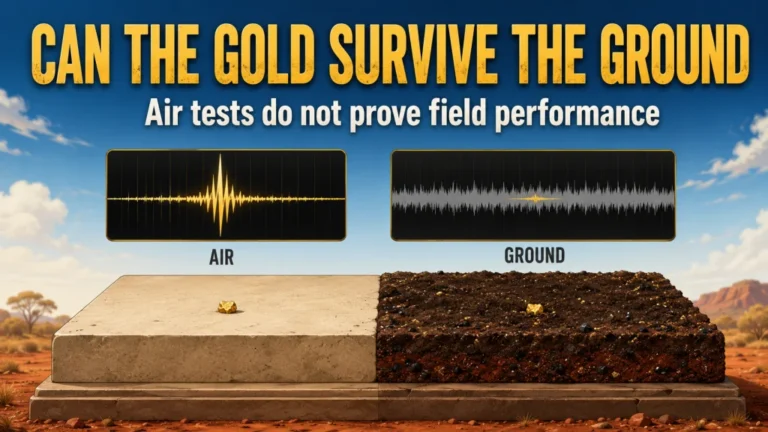
Online videos and manufacturer claims can identify candidates, but the detector should still be tested in the exact type of beach zone the buyer plans to hunt. A useful test changes one variable at a time and records both stability and target response. Random sweeping with different modes, coils, and sensitivity settings produces noise, not evidence.
| Test step | Keep constant | What to observe |
|---|---|---|
| Baseline over clean wet sand | Mode, coil height, sweep speed, sensitivity | Chatter, end-of-sweep falsing, and changing ground tones |
| Known targets on or just beneath the surface | Target orientation and position | Repeatability, tone quality, and target-ID movement |
| Several controlled sensitivity levels | Mode, target, and sweep path | The point where stability improves and target response weakens |
| Wet line to shallow wash | Mode and sweep control | Response as water depth and salt load change |
| Black sand patch, when present | Coil, mode, and target set | Overload, masking, false iron, and reduced sensitivity |
| Trash separation check | Target spacing and sweep speed | Whether useful targets remain distinct near iron or aluminum |
Field Note: I do not count a silent detector as a successful saltwater setup if the known targets have also become weak or disappear. The useful setting is the quietest one that still produces repeatable responses on the targets and depths relevant to that hunt.
Use targets that match the intended search, such as a small ring, a thin aluminum item in a similar conductivity range, a coin, and an iron object. The purpose is not to create a universal depth test. It is to learn whether the detector stays controlled while preserving enough information to make a digging decision in that ground.
Scott’s Field Judgment: Four Questions That Decide the Verdict
I use four questions to separate a credible saltwater candidate from a detector that is merely associated with beaches. This keeps the verdict consistent even when prices, software, and available models change. It also makes the reason for exclusion visible instead of hiding it behind a broad best-or-worst label.
- What is the evidence status? Is the claim supported by a current manual, manufacturer documentation, controlled saltwater testing, or only general marketing?
- Which exact beach zone passed? Dry sand, wet line, wash, surf, and submerged saltwater are not interchangeable.
- What is the main limitation? It may be waterproofing, audio, target information, stability, ergonomics, coil support, or service access.
- Why was an unsuitable detector excluded? State the technical mismatch, such as dry-sand-only performance, a non-submersible housing, unstable wet-salt behavior, or a PI recovery burden that does not fit a trash-heavy site.
This approach prevents two bad buying habits. The first is calling every waterproof detector an ocean detector. The second is rejecting a capable shoreline machine because it is not designed for full submersion, even though the buyer never plans to enter the water.
The final recommendation must therefore name the user, the zone, and the compromise. A value wet-sand hunter, a mixed-zone wader, a control-focused beach regular, and a PI specialist are buying for different jobs. One list position cannot replace that distinction.
Final Thoughts: Choose for the Hardest Zone You Will Really Hunt
The right ocean beach detector is not the machine with the loudest beach claim. It is the one that remains stable in the hardest zone you will realistically enter, keeps useful target response at a sensible setting, survives the water exposure, and gives you enough audio or target information to tolerate the trash at that site.
Start with the zone, then choose the technology, waterproof system, audio path, and control level. For many buyers, that leads to a fully waterproof simultaneous multi-frequency platform with a proven salt mode. For difficult mineralized surf and open submerged ground, PI may be the better specialist tool. Either way, test the exact mode, coil, sensitivity, ground, and beach zone before deciding that the detector has passed.
FAQs
🏖️ What type of metal detector works best on wet salt sand?
A detector with a proven salt-specific simultaneous multi-frequency implementation is the most practical choice for many wet-sand hunters. A salt-capable PI detector can be more stable in extreme conditions, but it usually provides less target information and requires more digging.
🌊 Is a waterproof detector automatically good in saltwater?
No. Waterproofing protects the detector from water ingress, while wet-salt performance depends on the electronics and ground-processing design. Verify both the submersion rating and stable operation over conductive salt.
⚙️ Why does my detector chatter when I reach the wet sand?
Wet ocean sand is conductive and can be read as a broad ground response. Use the correct salt or beach mode, perform the manual’s recommended setup, and reduce sensitivity only as much as needed to restore stability without losing repeatable target signals.
🎧 Can I use wireless headphones while the detector is underwater?
Do not assume that you can. Wireless radio signals and ordinary wireless headphones may not function underwater, so submerged detecting often requires a dedicated waterproof wired, bone-conduction, vibration, or manufacturer-specified audio system.
🧲 Is pulse induction always better for ocean beaches?
No. PI is strongest when salt and magnetic mineralization are the main problems, but limited discrimination can create a heavy digging workload in trash. A salt-capable target-ID detector is often more efficient on busy beaches.
🖤 What changes when a beach has black sand?
Black sand can add magnetic mineralization to the conductive salt response. Test the exact patch because some detectors reduce transmit power, overload, lose sensitivity, or identify deep nonferrous targets as iron under those combined conditions.
🧼 How should I care for a detector after saltwater use?
Follow the manufacturer’s instructions, rinse permitted surfaces with clean fresh water, and allow connectors and charging areas to dry before opening or charging them. Inspect seals, shaft locks, coil hardware, and cable points for trapped sand or salt.
Sources and References
- Minelab saltwater and beach-mode guidance: Technical explanations of conductive salt, separate beach profiles, black-sand behavior, waterproofing, underwater audio, and fresh-water rinsing.
- Manufacturer instruction manual for a salt-capable multi-frequency platform: Operating guidance used to verify beach modes, ground handling, recovery controls, waterproof limits, and audio considerations.
- Nokta beach-mode and waterproof-system documentation: Manufacturer information supporting the distinction between simultaneous multi-frequency beach operation, submerged use, and software-dependent saltwater behavior.
- XP technical guidance for multi-frequency and underwater operation: Documentation on simultaneous-frequency processing, submerged communication, waterproof setup, audio, and rinsing after use.
- Garrett pulse-induction saltwater manual: Technical reference for PI salt cancellation, underwater system design, threshold operation, and the trade-offs of specialist saltwater detection.